
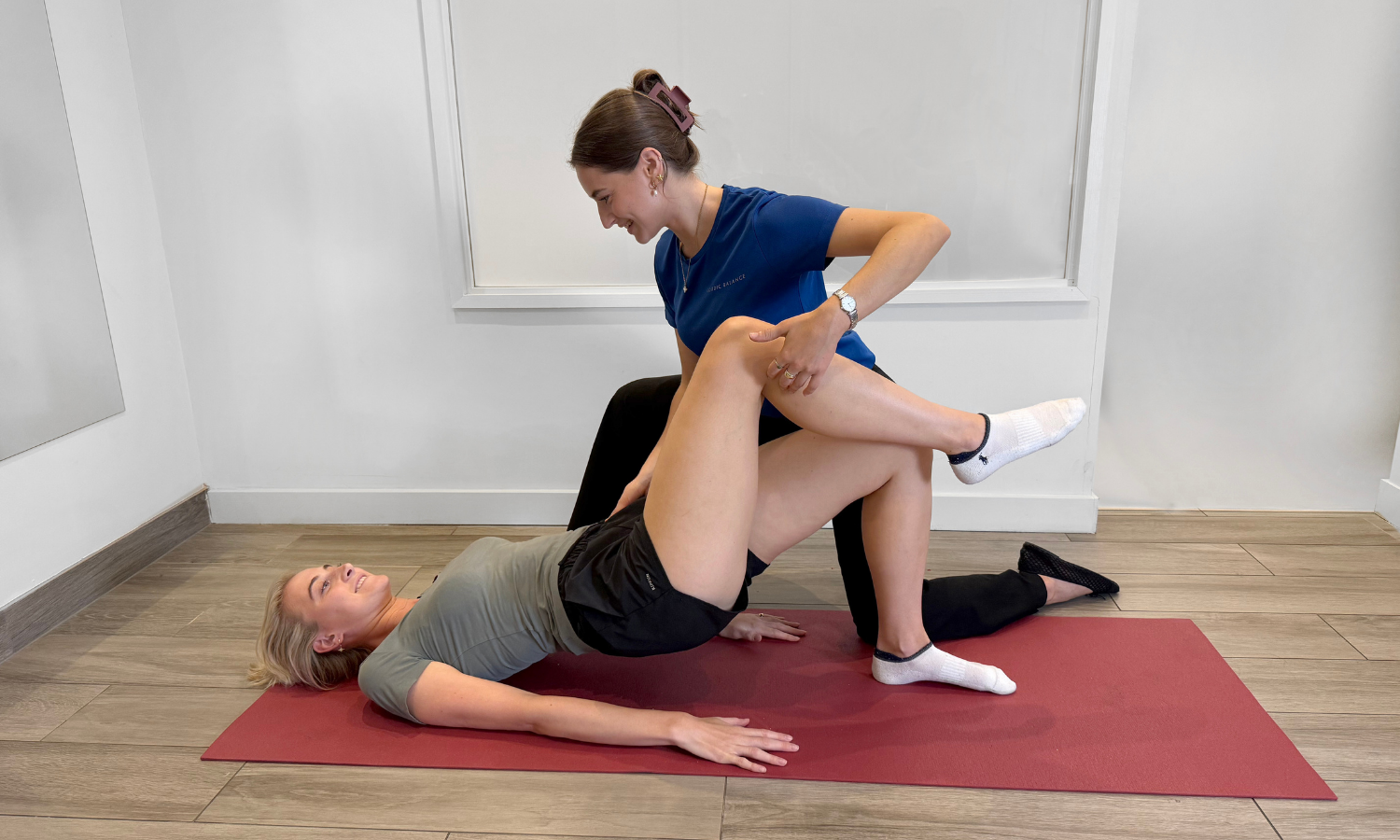
Pain can tell us part of the story. It cannot always tell us whether someone is stronger, moving better or ready to return to running, training or sport.
This multidisciplinary CPD explored how our clinicians can use a combination of objective testing, functional measures and everyday movement markers to track progress more meaningfully. The session covered musculoskeletal assessment, biomechanical testing, VALD technology and practical ways to measure the changes that matter to each patient.
Measuring progress beyond pain scores
Asking someone how much pain they are in is useful, but it does not always show how much their function has changed.
A patient might report similar pain from one appointment to the next while becoming stronger, walking more comfortably or finding everyday tasks easier. Equally, pain may have settled before the body has rebuilt the strength or control needed for a demanding return to sport.
The session explored how our practitioners can build a broader picture by combining what a patient tells us with measurable changes in strength, movement, balance and function.
What was covered
- Strength, power and muscular endurance
- Range of movement
- Balance and movement control
- Differences between sides of the body
- Fatigue and repeated-effort testing
- Functional changes in everyday life
- Return-to-running and return-to-sport markers
- Using technology alongside clinical assessment
Objective strength and movement testing
Objective testing gives clinicians another way to understand what has changed during rehabilitation.
Rather than relying solely on whether something feels better, the team explored repeatable tests to identify differences in strength, mobility, balance, and physical capacity.
For the lower limb, this included calf-raise testing, single-leg balance, knee-to-wall ankle mobility and different forms of hop testing. Knee and hip assessment covered single-leg strength and endurance alongside quadriceps, hamstring, adductor and abductor testing.
The session also looked beyond the lower limb. Shoulder testing explored strength and scapular control, while spinal assessment included thoracic mobility and trunk endurance measures.
The value lies less in collecting numbers for their own sake and more in having useful information to compare over time.
Using VALD DynaMo technology in rehabilitation
The CPD also explored how the VALD DynaMo system can add objective data to clinical assessment.
Digital dynamometry allows clinicians to measure force rather than relying entirely on visual observation or subjective judgement. During the session, practitioners looked at how to use it for areas including quadriceps, hamstrings, hip adduction and abduction, and shoulder rotation.
This can make differences between sides easier to identify and give the clinician a clearer way to track whether strength is changing as rehabilitation progresses.
Technology does not replace clinical judgement. Used well, it gives the practitioner another piece of evidence to inform it.
Tracking the everyday changes that numbers can miss
Not every meaningful improvement needs equipment to measure it. One of the most useful parts of the session was looking at the small functional changes patients often notice before they would describe themselves as “recovered”.
That might be getting dressed more easily, balancing on one leg while washing, using cutlery more comfortably with a painful shoulder, carrying a heavier bag, or simply moving more naturally when turning on the treatment bed.
These details can tell us something important: is treatment changing what the patient can actually do?
They also make progress more personal. What matters to someone returning to competitive sport will be very different from what matters to someone who wants to dress, work or move around the house comfortably.
Assessing readiness to return to running and sport
Feeling better is an important milestone. It is not always the same thing as being ready for sport.
The session explored tests that can give clinicians more information about strength, balance, repeated effort and the ability to tolerate more demanding movement before someone returns to running or sport.
For example, calf-raise testing can provide useful information about lower-leg endurance, while hop testing can challenge the leg in several directions. Balance testing and side-to-side comparisons can add further context.
These measures help move the conversation beyond “Does it still hurt?” towards a more useful question: “Is your body ready for what you want to ask it to do next?”
Clinical measures with a clear purpose
The aim of better outcome measurement is not to turn every appointment into a testing session.
It is to give practitioners better information for the decisions they need to make.
Combining objective data with clinical assessment and the patient’s own experience can help the team understand whether rehabilitation is progressing, where limitations remain, and what needs greater attention next.
For the patient, it can also make progress easier to see. Improvements in force, balance, movement or an everyday task can provide useful evidence that the work being done is translating into something meaningful.
Continued learning at Nordic Balance
This CPD brought together physiotherapists, sports therapists, osteopaths, chiropractors, strength and conditioning coaches and rehabilitation specialists to explore the same clinical question from different perspectives.
That multidisciplinary exchange is an important part of how we learn at Nordic Balance.
Our CPDs create space to compare approaches, sharpen clinical reasoning and explore tools that can improve how we assess and support our patients. The aim is practical: take what we learn and make it useful in the treatment room, rehabilitation space and gym.
Because continued professional development should do more than tick a box, it should change what you notice, the questions you ask and the decisions you make.
Interested in developing your career with Nordic Balance? Explore our current opportunities.