Physiotherapy
Patient Profile

Condition / Injury
ACL tear injury
Patient type:
Woman, 28, competitive Muay Thai fighter
Treatment duration:
9 monthsReturning to full-contact Muay Thai after a partial ACL tear
When the patient’s knee buckled during Muay Thai sparring, the immediate question was whether she would need ACL surgery. More importantly, she wanted to know whether she would ever trust the knee enough to fight again.
What a Grade 1–2 partial ACL tear means
The patient had sustained a partial tear of the anterior cruciate ligament, or ACL, one of the key ligaments that helps stabilise the knee. The ACL connects the thigh bone to the shin bone and helps control forward movement and rotation, particularly during twisting, landing and changes of direction. In this case, the injury was classified as a Grade 1–2 sprain, meaning the ligament was stretched and partially torn but not completely ruptured.
Three months after the injury, everyday movement was still difficult. Stairs were hard to manage, driving meant struggling with the clutch, and crouching or kneeling felt far from normal. But her biggest concern was getting back to full-contact Muay Thai.
She had already been through A&E, a fracture clinic consultation, physiotherapy and months in a hinged brace in an effort to avoid surgery. Despite that, she still wasn’t close to returning to the ring.
Why some partial ACL tears can be managed without surgery
Whether an ACL injury can be managed without surgery depends on the extent of the injury, the knee’s stability, the person’s symptoms, and what they need to do. In this case, an MRI showed that the ACL was still intact, although thickened and scarred following the original injury. The ligament provided enough stability that surgery wasn’t considered necessary. But an intact ligament didn’t mean the knee was ready for a return to Muay Thai.
Why an intact ACL wasn’t enough to return to sport
By the time the patient came to Nordic Balance, three months of favouring one side had weakened her quadriceps and hip. She also couldn’t fully straighten the knee. The focus therefore shifted from simply protecting the ACL to rebuilding everything the knee needed around it.
That meant restoring movement, rebuilding strength and gradually exposing the knee to greater demands, first for stairs, driving and everyday movement, and eventually for running, kicking, changing direction and taking contact.
How Non-Surgical ACL Rehabilitation Progressed Over Nine Months
-
Weeks 0–1: Restoring Knee Movement
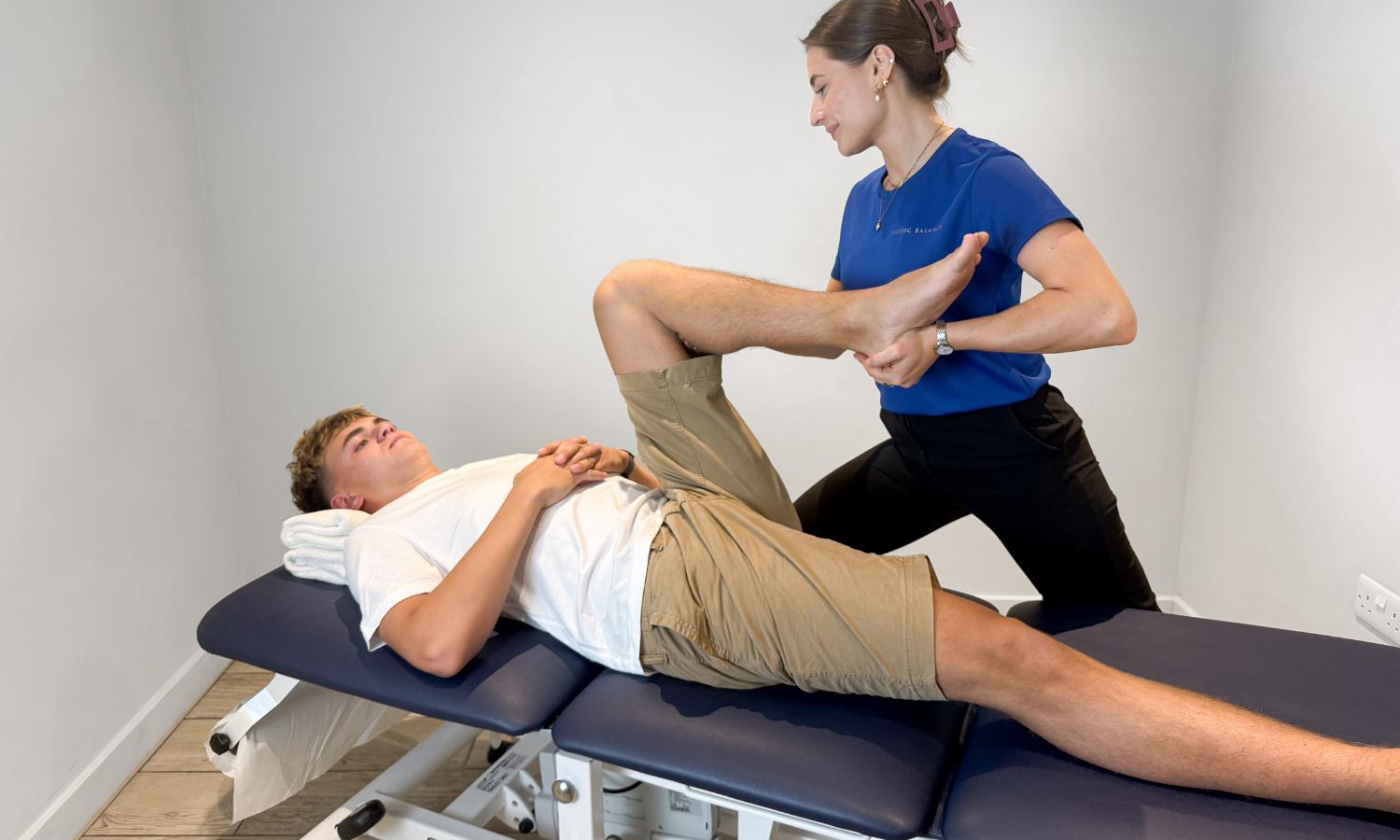
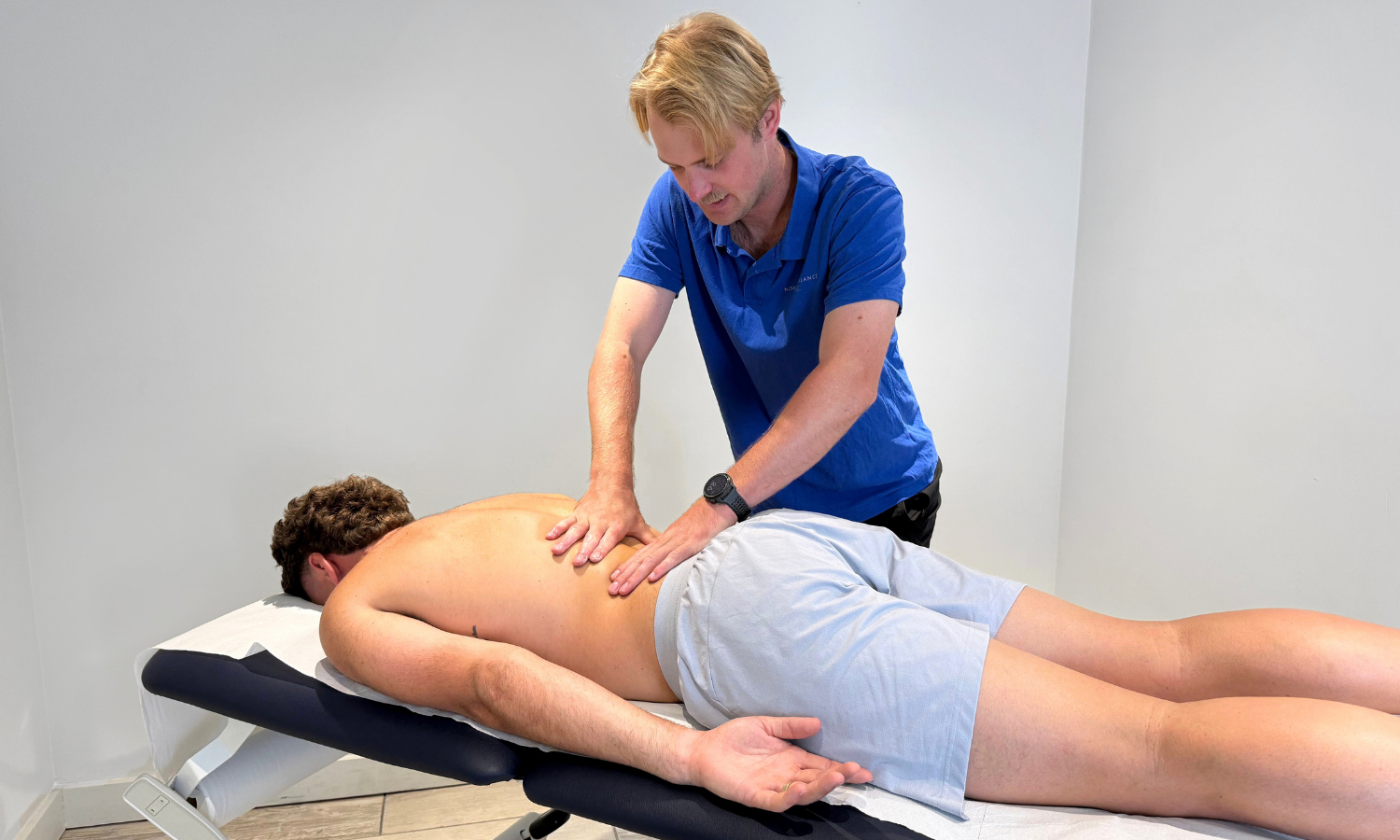
The initial physiotherapy assessment found that the patient could not fully straighten her knee and was experiencing pain and weakness around the joint. The rigid brace was removed, and treatment began with gentle exercises to restore movement and start rebuilding confidence in using the leg again.
-
Weeks 3–9: Rebuilding Strength and Control
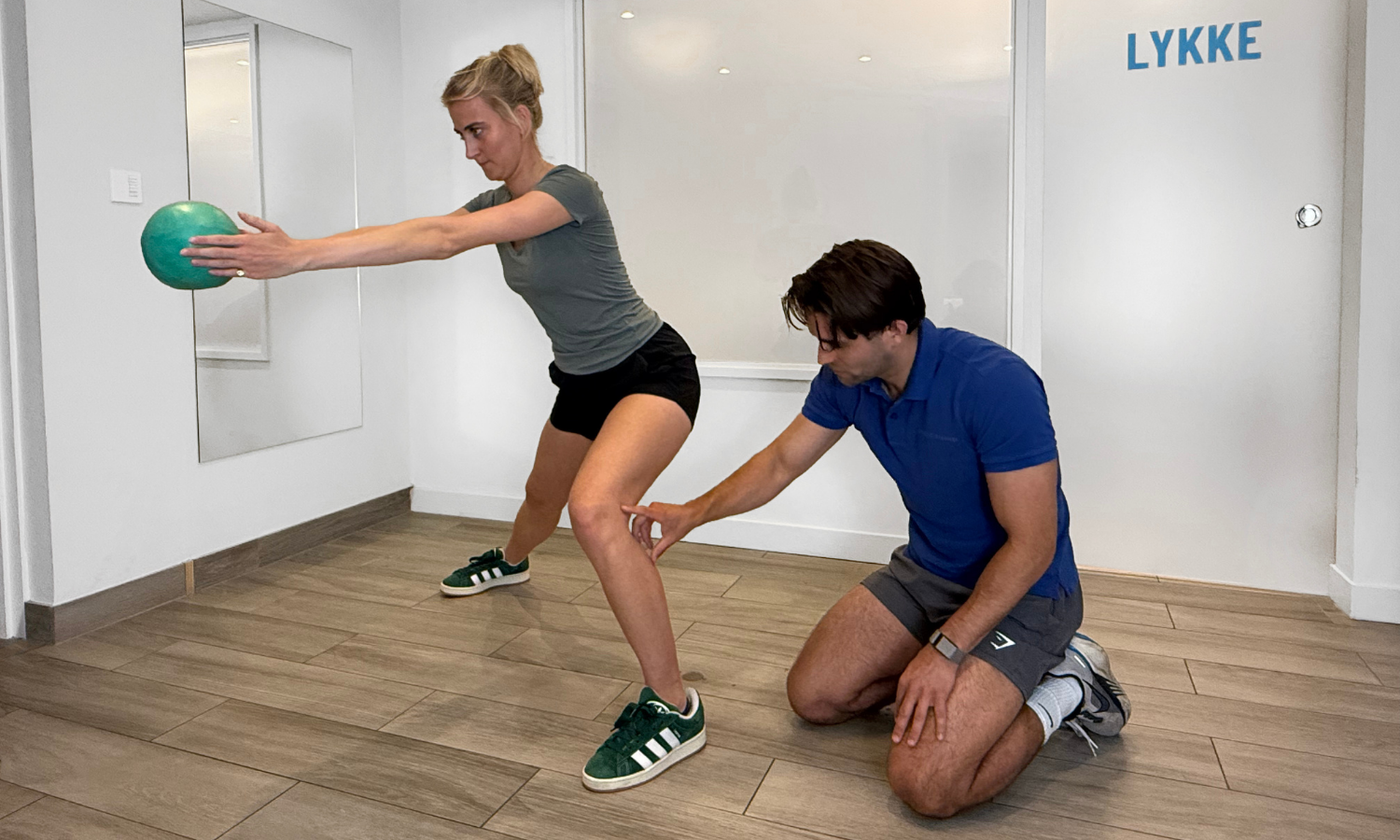
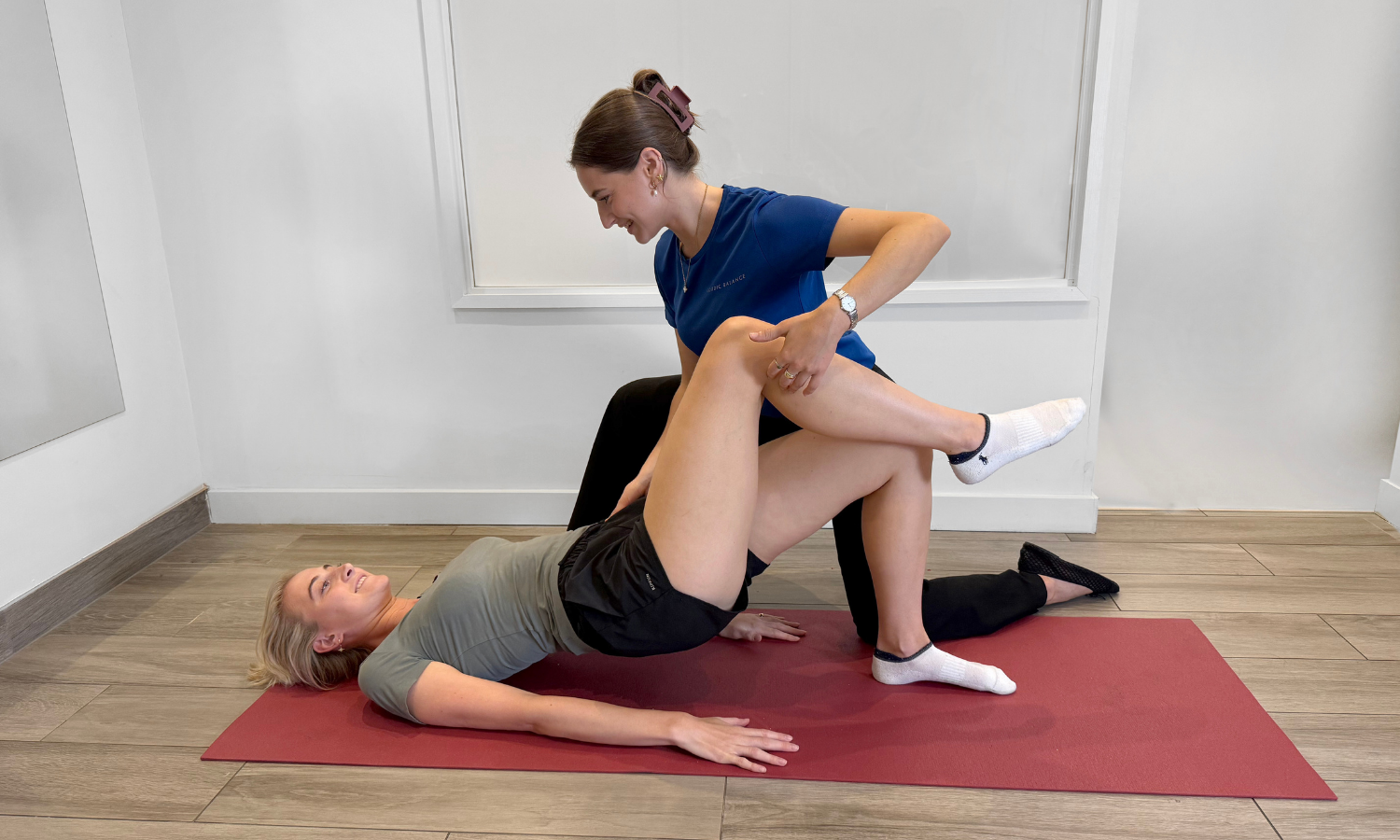
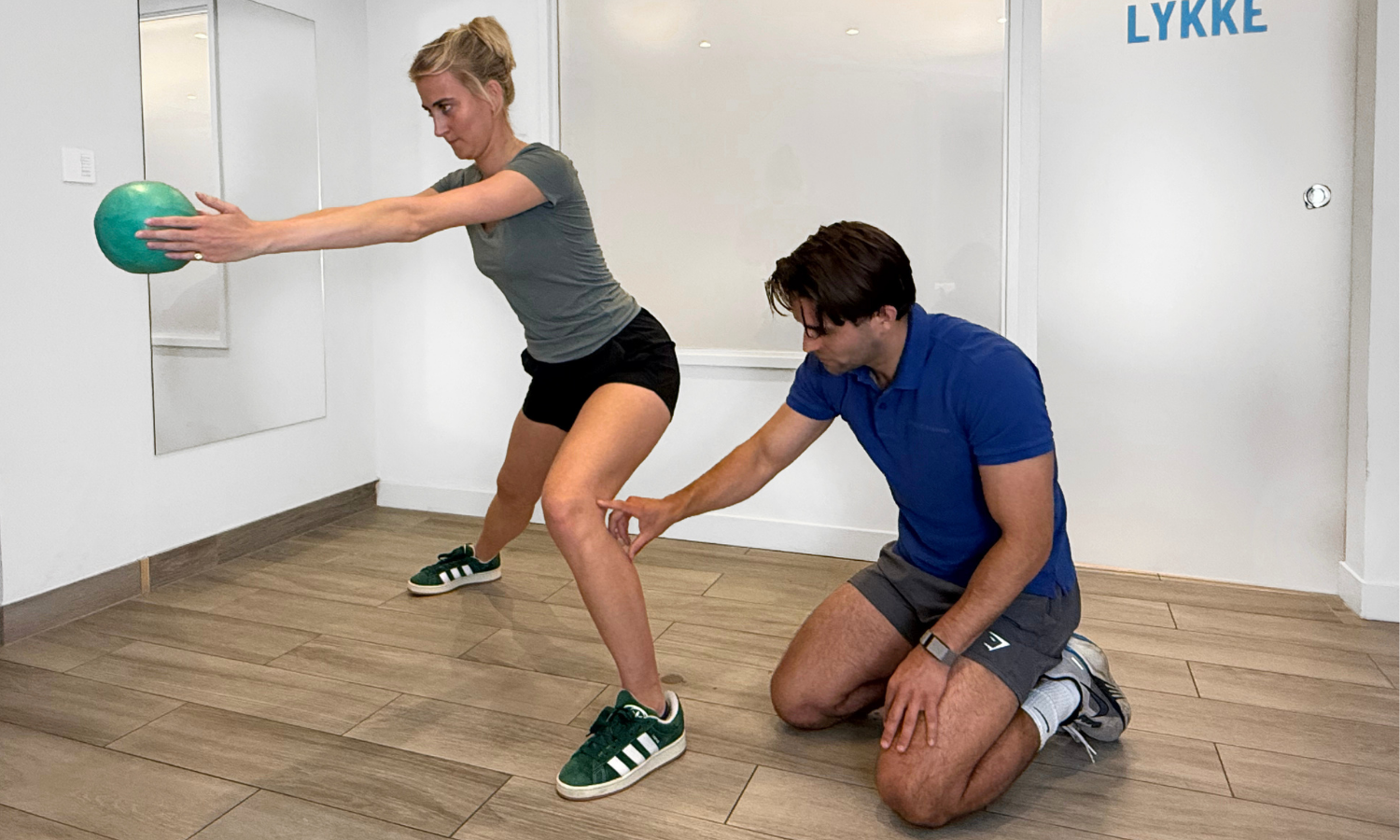
As movement improved, rehabilitation progressed into strength work. Box squats, single-leg bridges and light jump training were introduced to rebuild strength and control through the hip, thigh and knee. By week nine, the patient had regained full range of movement and passed key strength and balance tests.
-
Weeks 15–26: Returning to Running and Impact
Once the knee was ready for greater load, a gradual running programme began. Running volume increased progressively by introducing forward jumping and change-of-direction drills. Muay Thai kicks were then brought back into training once she had been cleared to run confidently. Each stage brought the rehabilitation closer to the movements she would eventually need in the ring.
-
Weeks 30–40: Preparing for Full-Contact Muay Thai
The final stage placed progressively greater demands on the knee. Agility and change-of-direction drills became more challenging, while strength testing showed that the injured leg was approaching the performance of the uninjured side. The goal was no longer simply to move without pain. The knee needed to cope with the speed, direction changes, impact and unpredictability of full-contact Muay Thai.
Why non-surgical ACL rehabilitation worked in this case.
Simon Poole, a physiotherapist at Nordic Balance with particular experience in complex knee and ACL cases, both conservatively managed and post-surgery, led the patient’s rehabilitation.
When a patient has already had treatment, but progress has stalled, Simon returns to the assessment. Guided by current research and clinical best practice, Simon identifies what may still be limiting recovery and adjusts the rehabilitation accordingly.
What the physiotherapy assessment found
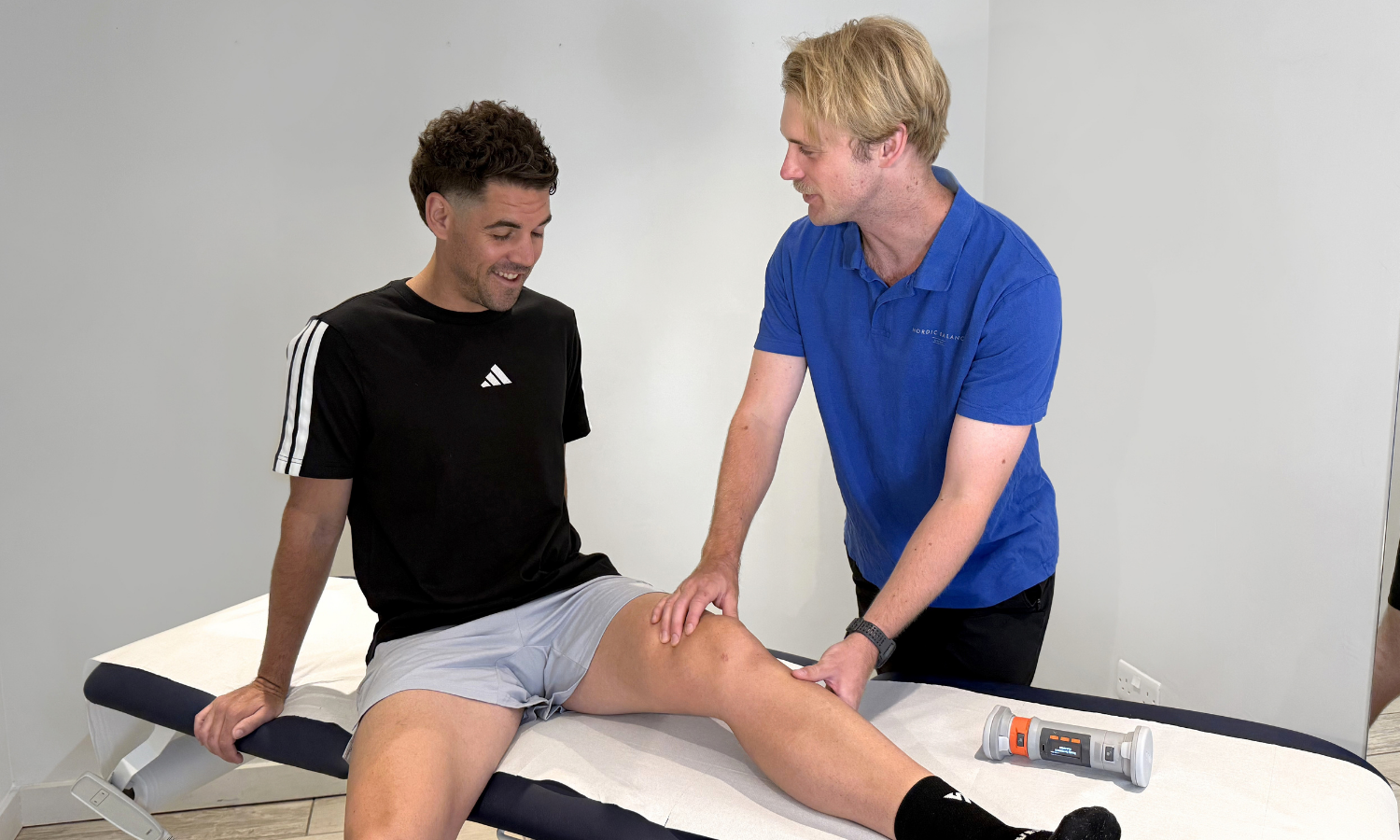
Simon’s assessment showed that the ACL itself was still providing stability. The bigger issue was what had developed around it. The patient could not fully straighten the knee, her quadriceps and hip had weakened, and other muscles were compensating.
That changed the direction of treatment. Rather than continuing to protect the ligament, rehabilitation focused on restoring movement across the leg and progressively rebuilding the strength and control required for Muay Thai.
ACL recovery progress based on testing
The patient was involved in every decision throughout her rehabilitation. Simon explained what they were working on, why each stage mattered and what she needed to demonstrate before progressing. That gave her a clear sense of where she was in the process and what the next milestone would be.
Progress was not based on simply reaching the next week on a calendar. Each stage had to be earned. The physio reviewed strength, movement, balance, and performance before introducing greater demands, from running and jumping to changing direction, kicking, and eventually taking contact again.
That approach helped make the rehabilitation feel purposeful rather than uncertain. She could see why each exercise mattered, understand what her knee could do, and build confidence alongside physical strength.
Rebuilding trust in the knee
For an athlete returning after an ACL injury, physical capacity is only part of the challenge. The patient also needed to trust the knee enough to throw a kick, change direction and eventually take contact without hesitating. That confidence was rebuilt gradually as the rehabilitation became more demanding and objective testing showed what the knee could tolerate. Nine months after arriving unsure whether she would ever fight again, she returned to full-contact Muay Thai without surgery.
Back to full-contact Muay Thai after ACL rehabilitation
After nine months of progressive non-surgical ACL rehabilitation, the patient had:
- Achieved a 20/20 total stability score
- Regained quadriceps strength that was close to equal between both legs
- Demonstrated strong single-leg hop performance on both sides
- Returned to full-contact sparring and competitive Muay Thai training
- Managed the ACL injury without surgery
- Continued strength training to maintain and build on her progress.
Her recovery shows why a partial ACL tear should be assessed on the individual rather than treated according to the diagnosis alone. In this case, the ligament was stable enough to avoid surgery, but restoring movement, strength, performance and confidence still required a structured rehabilitation programme.
If you’ve been advised that you may need surgery for an ACL injury or tear, or your rehabilitation has stalled, a detailed assessment at Nordic Balance can help establish what your knee is capable of and what the next stage should involve.
If you’ve been advised you may need surgery for an ACL injury, or your rehabilitation has stalled, a detailed assessment at Nordic Balance can help determine what your knee can do and what the next stage should involve.