Physiotherapy
Patient Profile

Condition / Injury
Achilles tendinopathy
Patient type:
Woman in her early 30s, Tri-sport competitor.
Treatment duration:
12 weeksRunning with Achilles tendon pain
For this tri-sport competitor, running, cycling, and swimming were part of her normal life, including her daily commute. Then pain developed at the back of her left heel following a sharp increase in running. Within two months, she was limping whilst walking, struggling to cycle to work and, worst of all, unable to run. The heel felt hot, sensitive and tender, with pain particularly noticeable first thing in the morning.
She tried adapting her walking and training, reduced her cycling and experimented with heel inserts, ice and heat. But without knowing how much activity the Achilles could safely tolerate, the symptoms continued to worsen. Running was the activity she most wanted back. By the time she came to Nordic Balance, however, the first goal was more basic. She wanted to walk normally again and be pain-free.
Physiotherapy Assessment for Insertional Achilles Tendinopathy
Physiotherapist Samuel Jenkins diagnosed insertional Achilles tendinopathy, affecting the point where the Achilles tendon attaches to the heel. Unlike pain higher up the Achilles, insertional tendinopathy involves an area that is exposed to both pulling forces from the calf and compression against the heel bone. Recent research has reinforced the importance of managing that compression while progressively rebuilding tendon strength.
Sam’s assessment showed significant calf tightness and a clear loss of function on the affected side. A single-leg calf raise was painful, balancing on the left leg reproduced symptoms, and jumping or hopping was not yet possible. The Achilles was not ready for running. Rehabilitation therefore started by rebuilding what running depends on: comfortable walking, calf strength, and the ability to handle more load progressively.
Treating insertional Achilles tendinopathy with progressive loading
Achilles tendinopathy creates an awkward problem for active clients. Too much load can keep setting the tendon off, but avoiding load altogether does not prepare it for running again. The answer was to find a level the Achilles could tolerate and build from there.
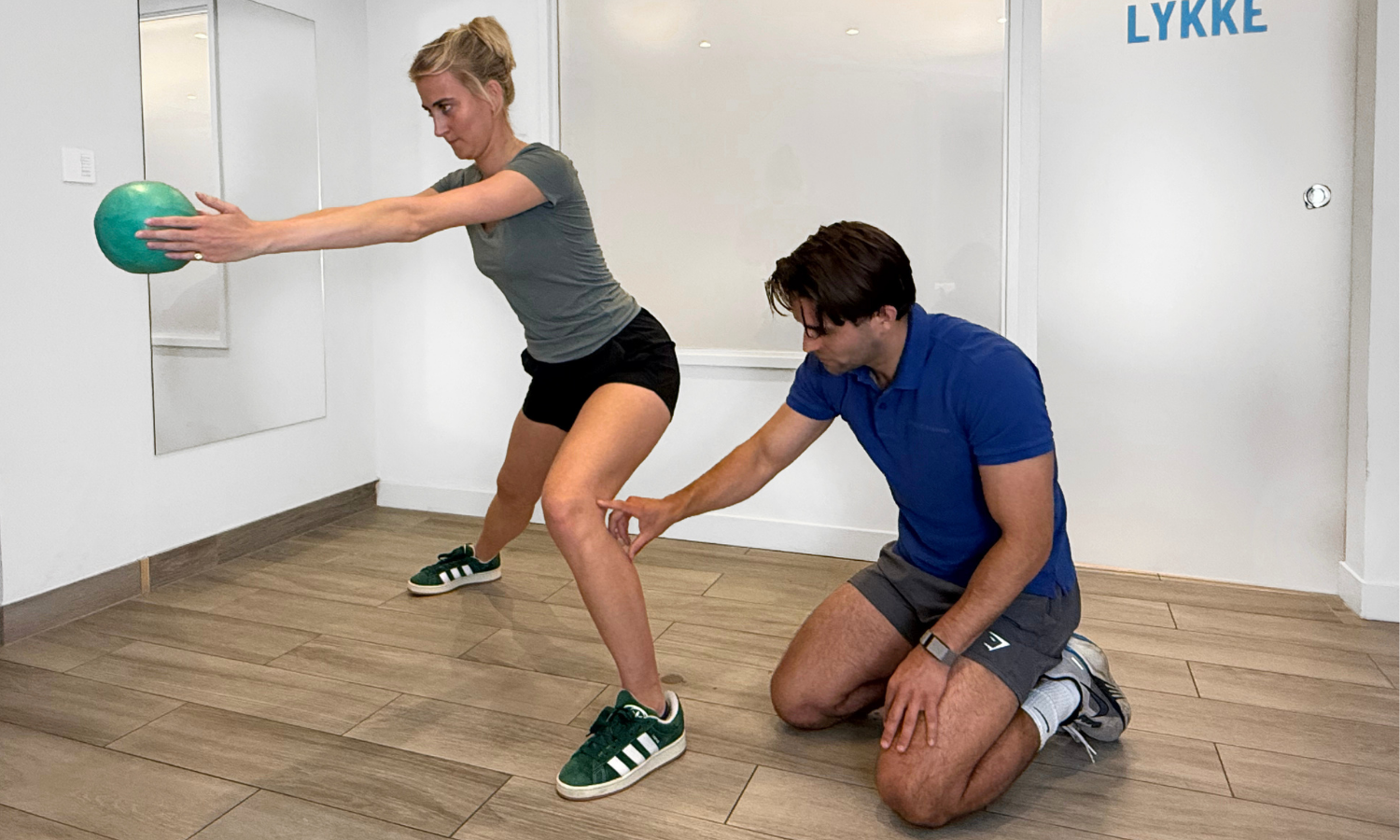
Sam set clear limits around pain and adjusted activity while introducing exercises that gradually loaded the calf and tendon. Early exercises stayed within a range that did not repeatedly flare symptoms, giving the Achilles a chance to strengthen without constantly pushing beyond what it could manage.
That approach reflects current rehabilitation thinking. A 2025 randomised trial in insertional Achilles tendinopathy found better outcomes when progressive tendon loading was combined with strategies that reduced excessive compression at the insertion.
The programme progressed through strength, energy-storage and sport-specific loading rather than relying on rest alone. For this patient, the goal was not simply to make the heel less painful. It was to build an Achilles capable of walking, cycling, running and eventually returning to endurance sport.
12 Week Achilles Tendinopathy Rehabilitation
-
Weeks 0–2: Walking without pain and limping
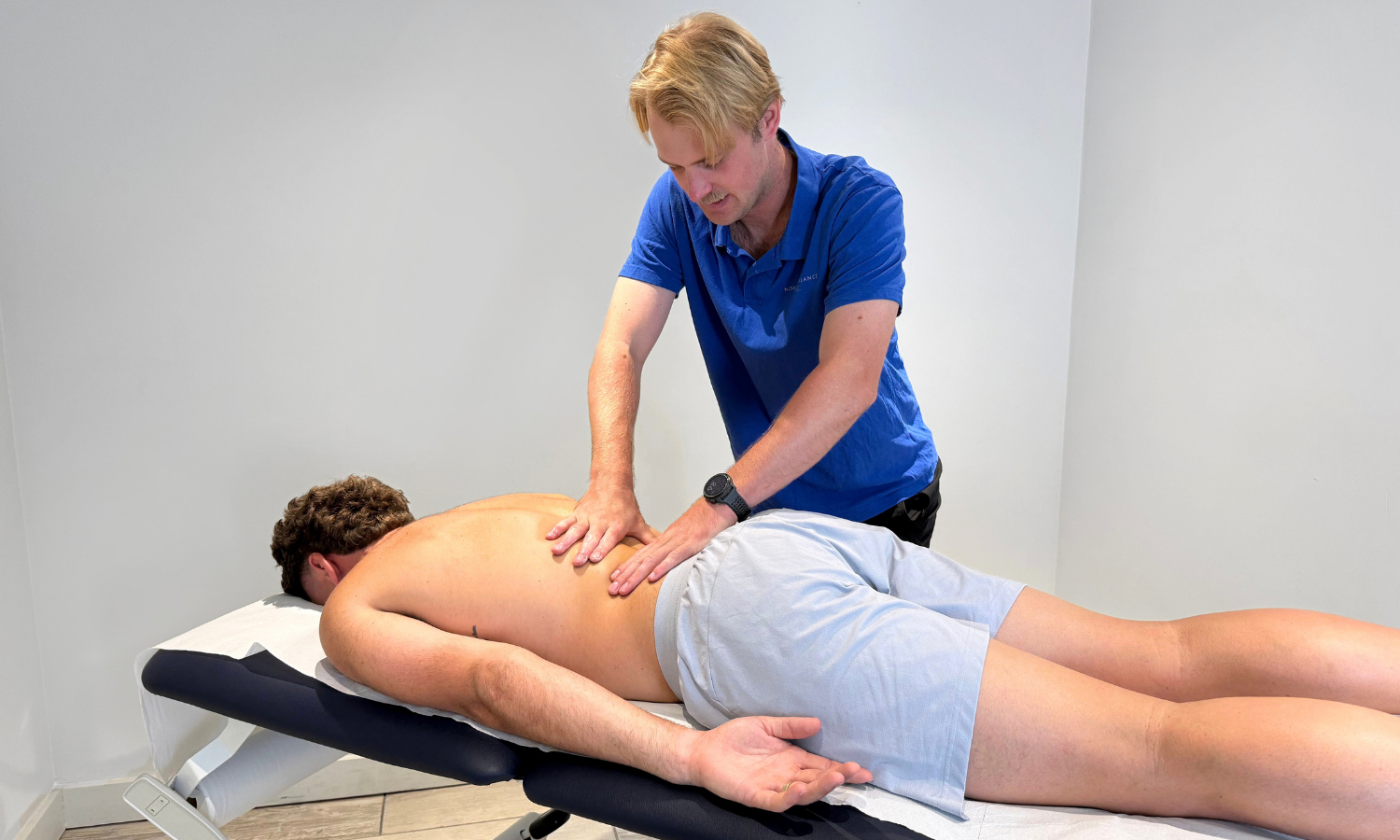
Treatment began with activity advice and exercises that gradually loaded the Achilles while keeping pain within a clearly defined limit. Soft-tissue treatment through the calf and Achilles was also used where needed. Within two weeks, the patient could walk short to medium distances without limping, complete a double-leg calf raise without pain and cycle to work comfortably again.
-
Weeks 2–6: Rebuilding calf and Achilles strength
As symptoms settled, the exercises became more demanding. By week four, the patient could complete a single-leg calf raise and walk short distances barefoot without pain. By six weeks, longer walks in supportive shoes were also comfortable. The focus shifted from settling symptoms to rebuilding the strength the Achilles would need for running.
-
Weeks 6–12: Building from strength to impact
At eight weeks, the patient could complete 10 pain-free single-leg calf raises, although left calf strength was still around 50% of the unaffected side. By week 10, this had progressed to 15 pain-free repetitions, and jumping on the spot was comfortable.
At week 12, the patient could hop without pain and calf strength had improved to around 85% of the other side. That progression mattered. Running places faster, repeated loads through the Achilles, so calf raises alone were not enough. Moving from strength work into jumping and hopping gave Sam a clearer picture of whether the tendon was ready for the next step.
Achilles tendinopathy rehabilitation outcomes
The patient returned to running at week 14 and has since built back to 30–40km+ a week, alongside more than 100km of cycling.
- Returned to walking and cycling to and from work comfortably
- Progressed from painful calf raises to 15 pain-free single-leg repetitions
- Returned to jumping and hopping without pain
- Rebuilt left calf strength to around 85% of the unaffected side
- Returned to running at 14 weeks
- Since built back to 30–40km+ of running each week
- Booked ultramarathons for 2027.
This case shows why insertional Achilles tendinopathy rehabilitation is about more than waiting for the pain to disappear. The Achilles had to progressively regain the strength and tolerance required for walking first, then impact, and finally the repeated demands of running.
For this runner, every stage had a purpose. Walking normally made daily life easier. Calf raises rebuilt strength. Hopping tested whether the Achilles was ready for greater demand. Running returned when the tendon had shown it could cope.
If Achilles tendon pain is stopping you from running, walking or training normally, a physiotherapy assessment at Nordic Balance can help establish what your tendon can tolerate now and build a plan towards what you want to do next.