Physiotherapy
Patient Profile

Condition / Injury
Knee injuries Post-operative
Patient type:
Woman, 57, Pilates instructor
Treatment duration:
Seven months and ongoing.Returning to work after a total knee replacement
When this 57-year-old Pilates instructor underwent a total left knee replacement in late 2025, recovery meant far more than getting the knee moving again. Her career depended on being able to demonstrate movement, spend long periods on her feet and trust the knee through repeated bending, loading and exercise. She also wanted to get back to the gym and, eventually, return to tennis. But this was not a straightforward knee replacement recovery.
Knee replacement recovery after an ACL reconstruction
About 30 years earlier, the patient underwent an ACL reconstruction and several other procedures on the same knee in the US. Years of conservative treatment followed, but pain and loss of function continued until a total knee replacement became necessary before the age of 60. That history mattered. The knee had already been through multiple operations, long-standing pain and previous scar formation before the replacement took place.
Following surgery, the knee would not fully bend or straighten. Walking was limited and, for around eight weeks, the patient could not manage more than 3,000 steps a day. Sleep was also disrupted by pain, while the surgical scar took time to settle.
The biggest concern, however, was getting back to work. Substantial time away from teaching meant rehabilitation needed to deliver more than better range-of-motion figures. The patient needed enough strength, movement and confidence to return to her previous working hours and manage a physically demanding career again.
How Knee Replacement Rehabilitation Progressed Over Seven Months
-
Weeks 0–8: Restoring movement and walking independently
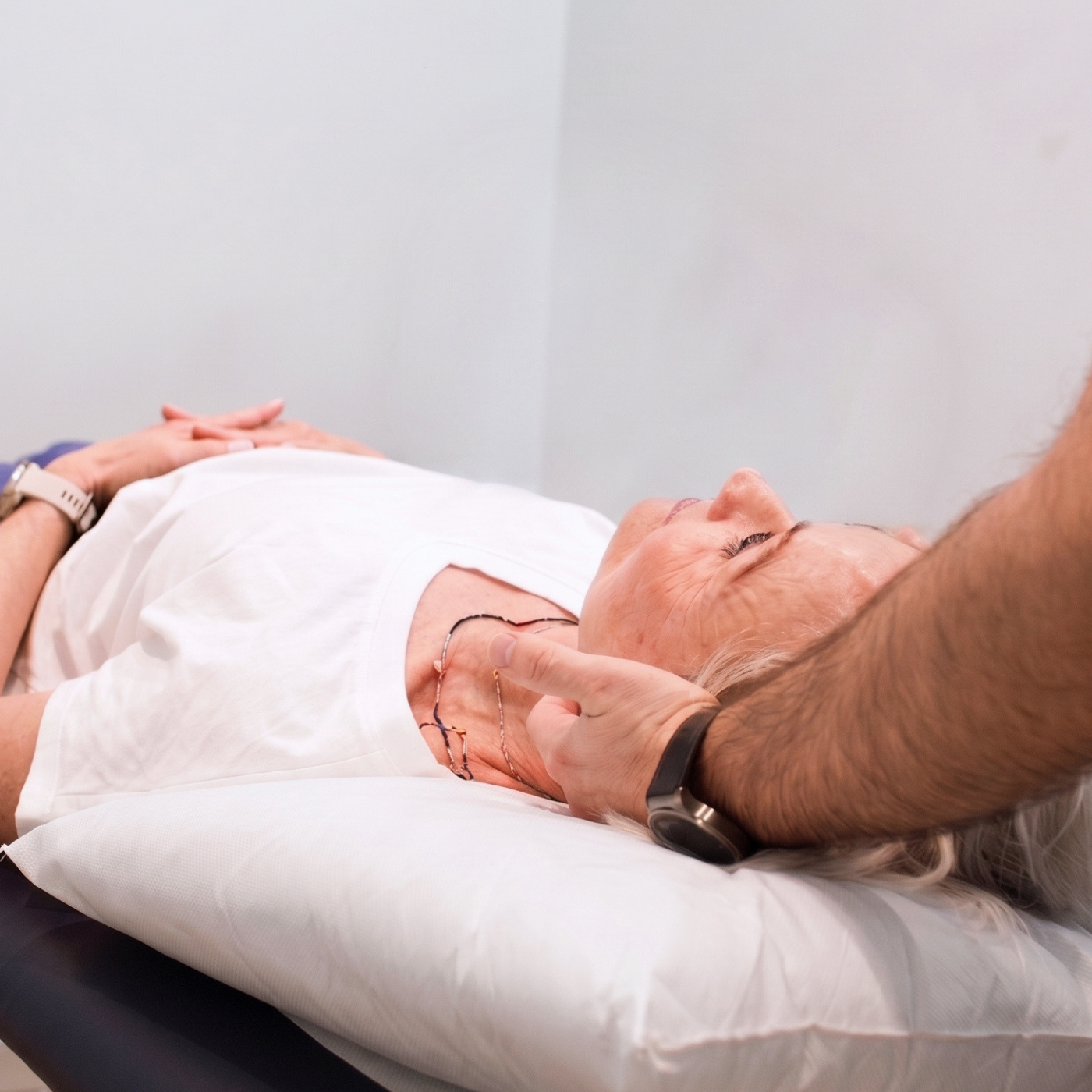
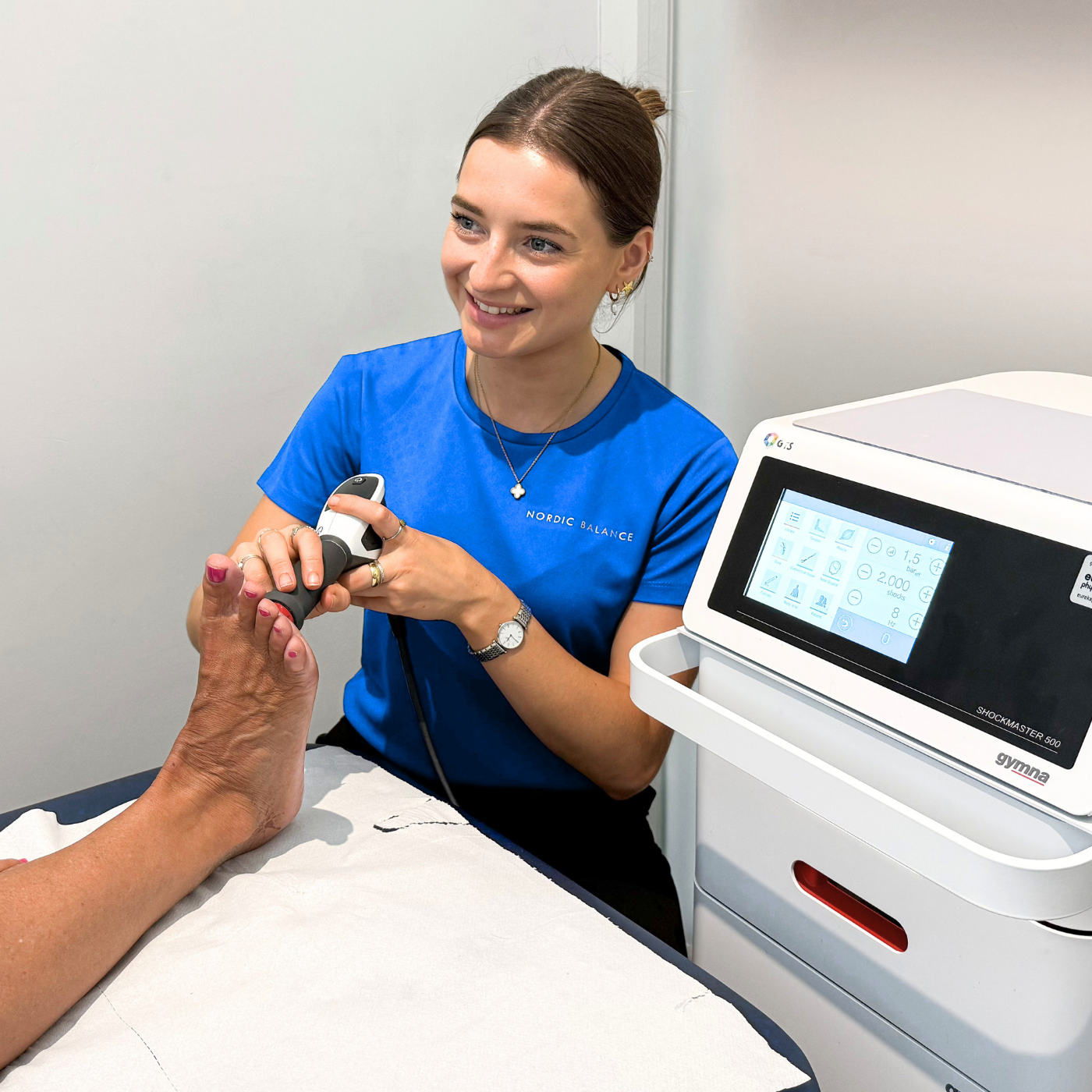
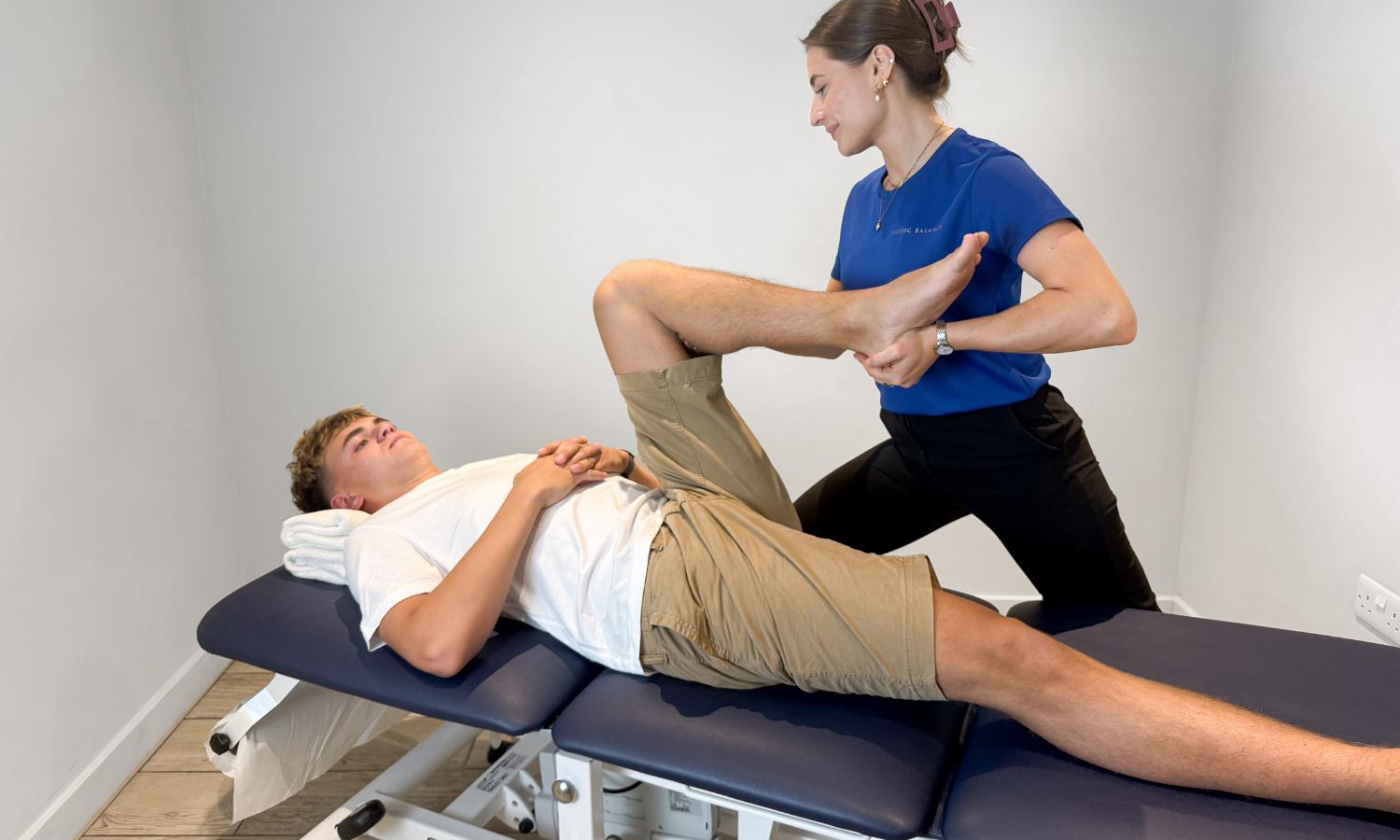
The early priority was regaining knee movement and beginning to rebuild strength. Hands-on treatment, joint mobilisation and gentle exercise supported this stage of recovery. By six weeks, the patient was walking without crutches. Two weeks later, she had regained full active knee extension. Those early milestones mattered beyond the treatment room. Walking independently made everyday life easier, while restoring full extension gave the knee a better foundation for the strengthening work that followed.
-
Weeks 8–12: Rebuilding strength for everyday movement
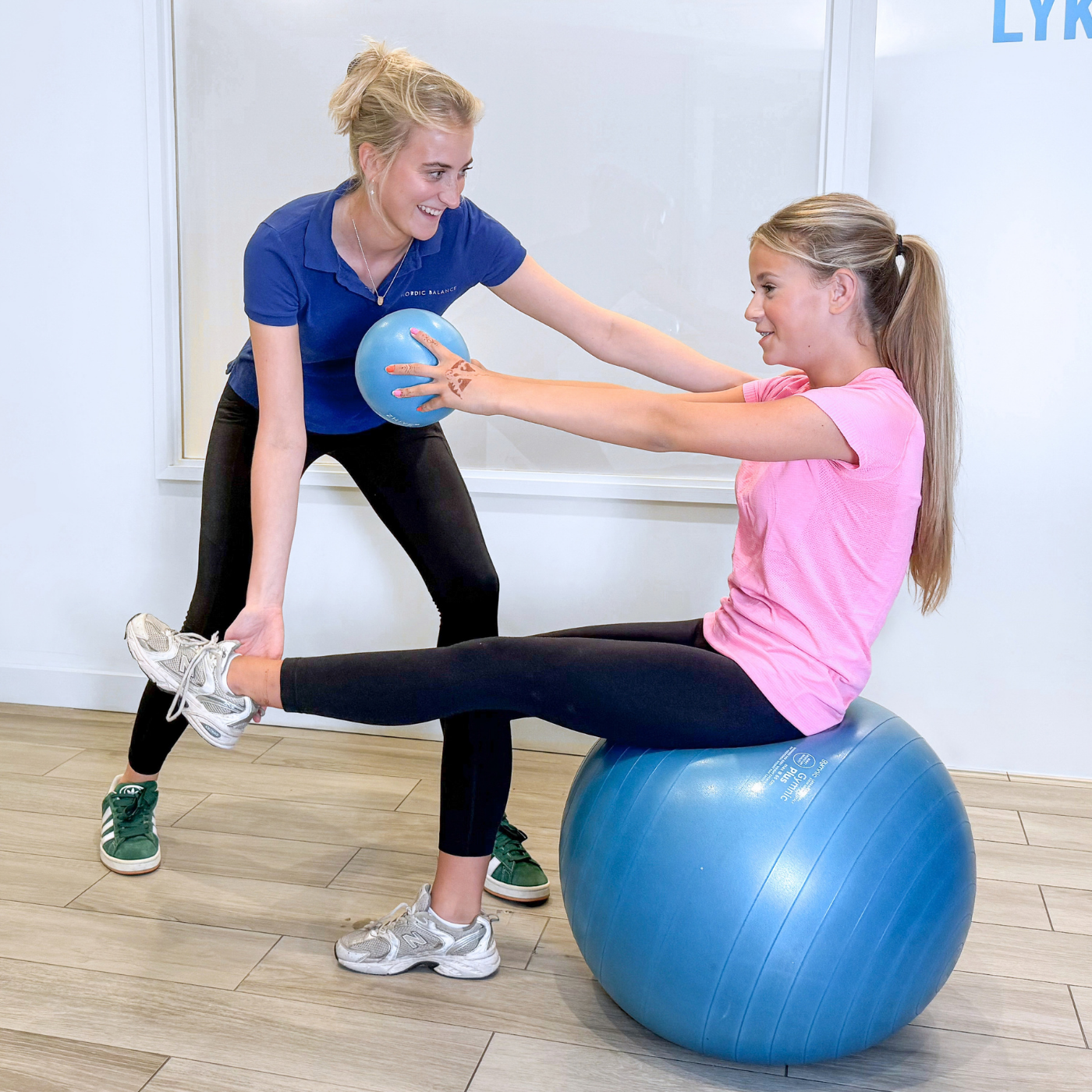
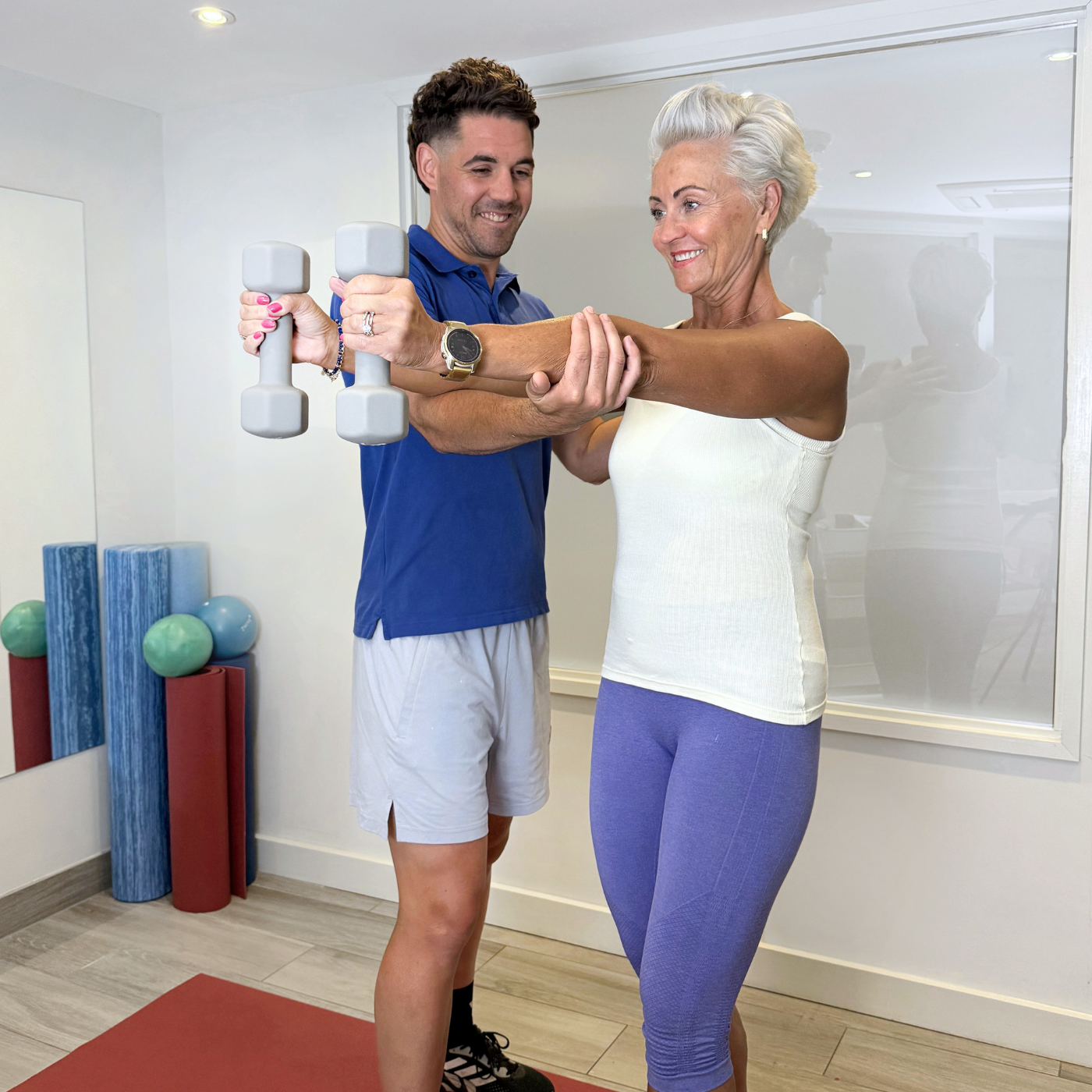
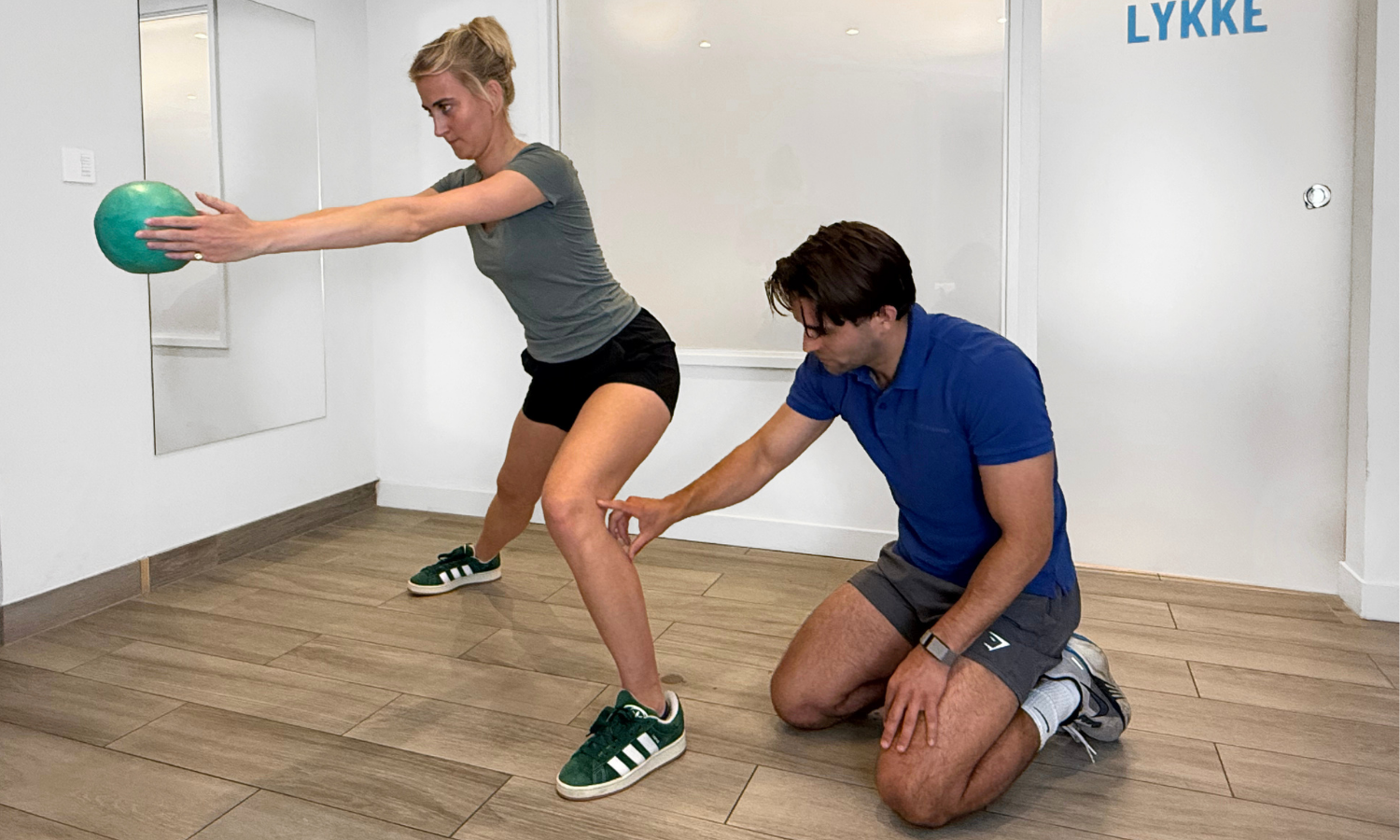
Once movement began to return, rehabilitation progressed into a graduated strengthening programme. Exercises focused on the core, hips and legs, rebuilding the physical capacity lost after surgery and helping the patient manage everyday movement more comfortably. For someone whose work involved teaching Pilates, strength needed to translate into control, endurance and confidence rather than simply producing a better test result.
-
Months 3–4: Walking further and building capacity
By three months, the patient was walking around 80% of her previous distances. Strength through the leg continued to improve, and everyday activity became more manageable. Rehabilitation could then place progressively greater demands on the knee as its capacity increased.
-
Months 4–7: Returning to Pilates and gym training
By six months, much of the movement and strength lost after surgery had returned. More importantly, that progress was now carrying over into the life the patient wanted to get back to. She gradually returned to her previous working hours as a Pilates instructor and resumed regular gym training four times a week. Rehabilitation remains ongoing, with returning to tennis the next major goal.
Physiotherapy after knee replacement
Physiotherapist Samuel Jenkins led the patient’s rehabilitation. Sam regularly works with clients whose pain or injuries have been affecting them for a long time. In these cases, his assessment looks beyond the most recent diagnosis or procedure to understand what may still be limiting recovery. For this patient, that meant considering not only the knee replacement itself, but the effects of several previous operations and decades of difficulty with the same knee.
What the physiotherapy assessment discovered
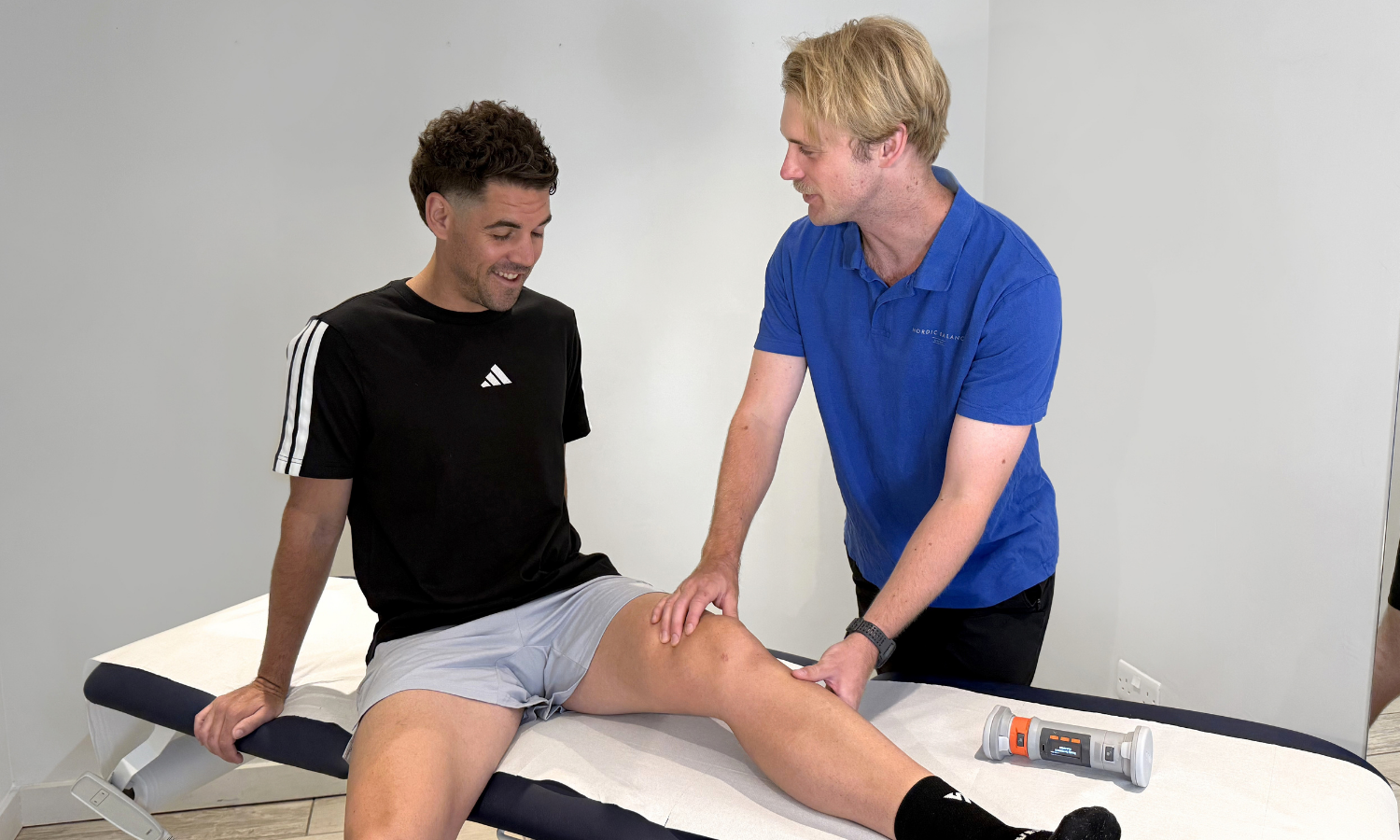
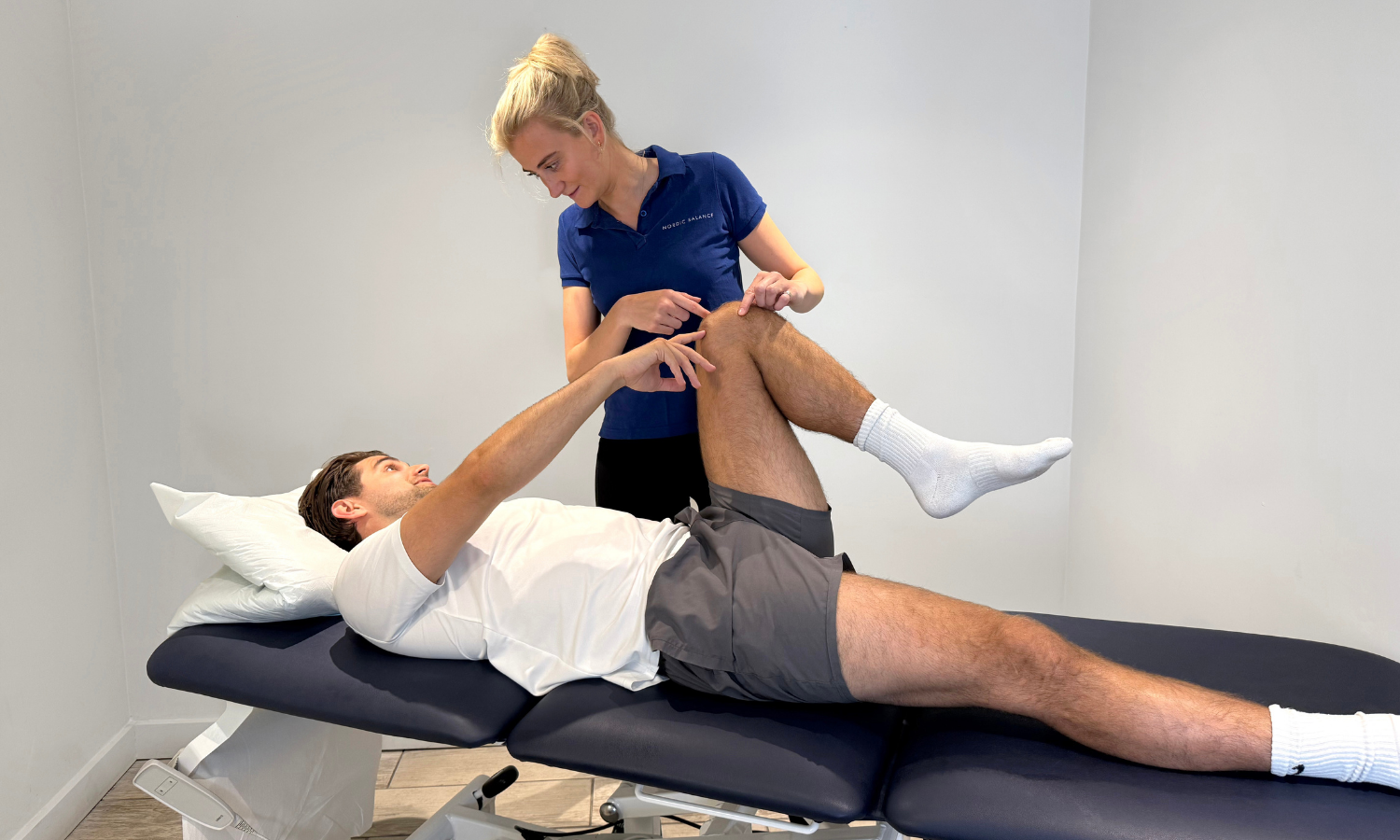
The initial assessment showed that the patient could not fully bend or straighten the knee. There had also been significant muscle loss through the thigh and calf, with substantial weakness throughout the leg. Walking capacity was limited; teaching Pilates was not yet possible, and returning to tennis remained a distant goal.
The surgical scar also required careful consideration. The replacement incision had passed through an area affected by previous surgery and scarring, and the scar remained significantly inflamed during the early stages of rehabilitation. Together, those findings meant recovery needed to be progressed carefully rather than treating the replacement as an isolated event.
Rebuilding movement before adding more load
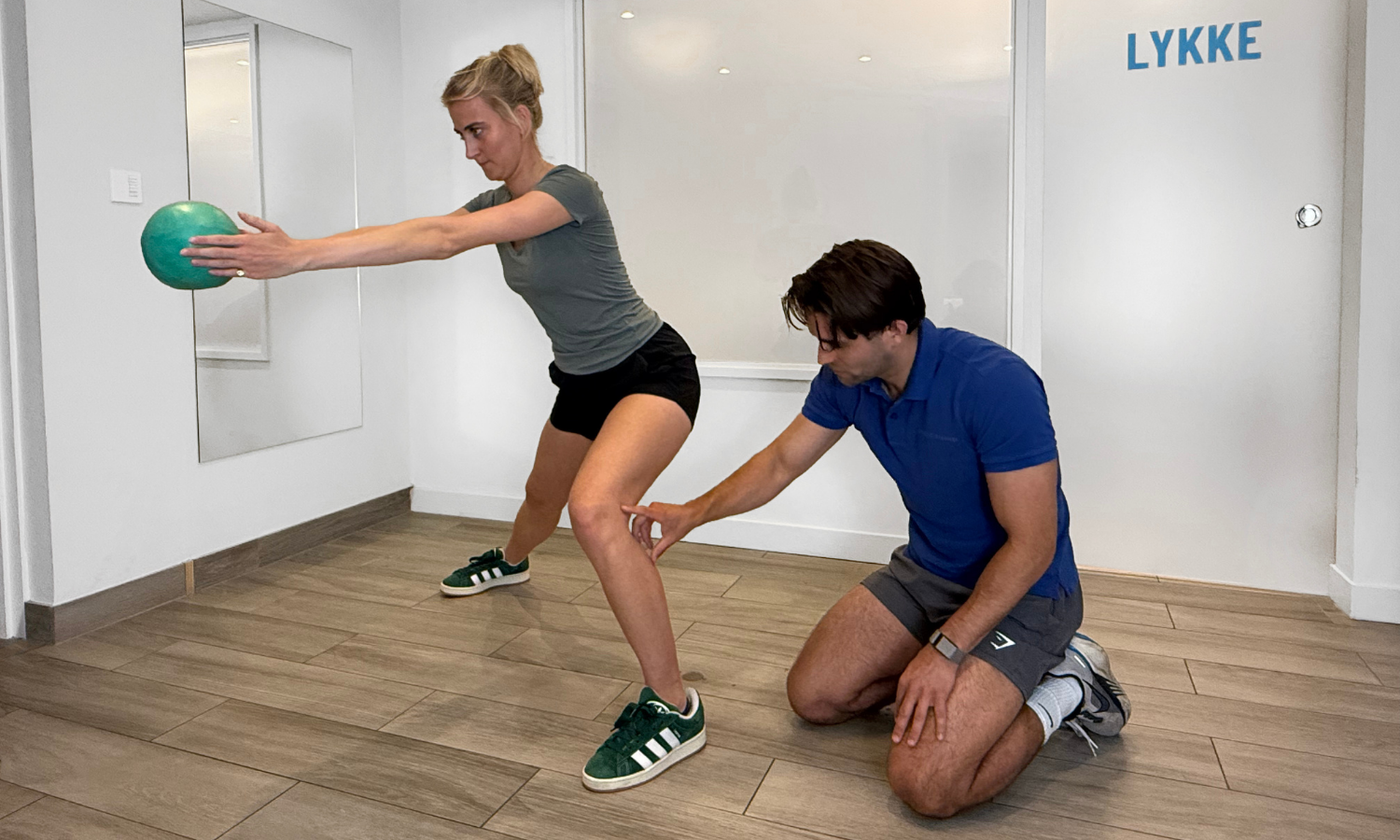
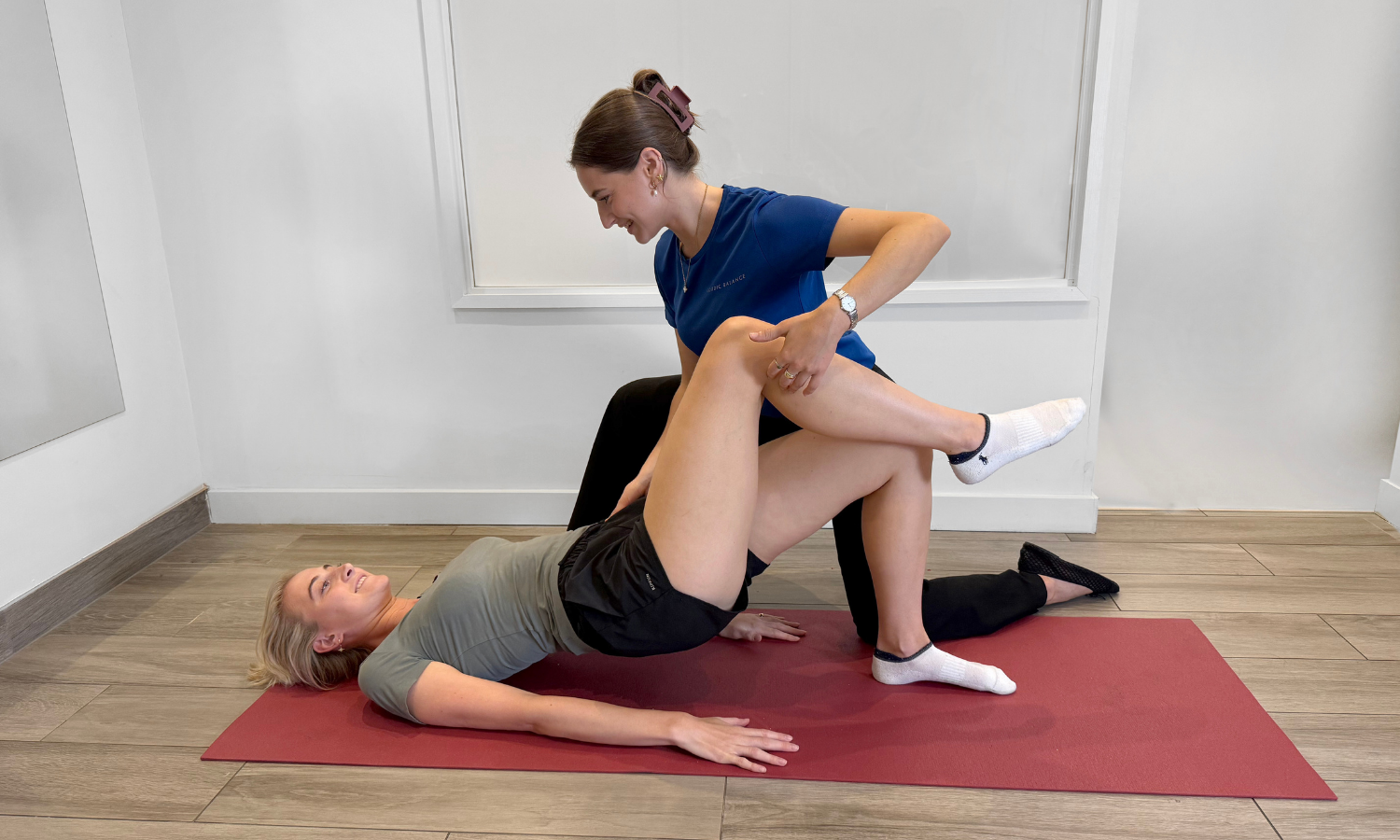
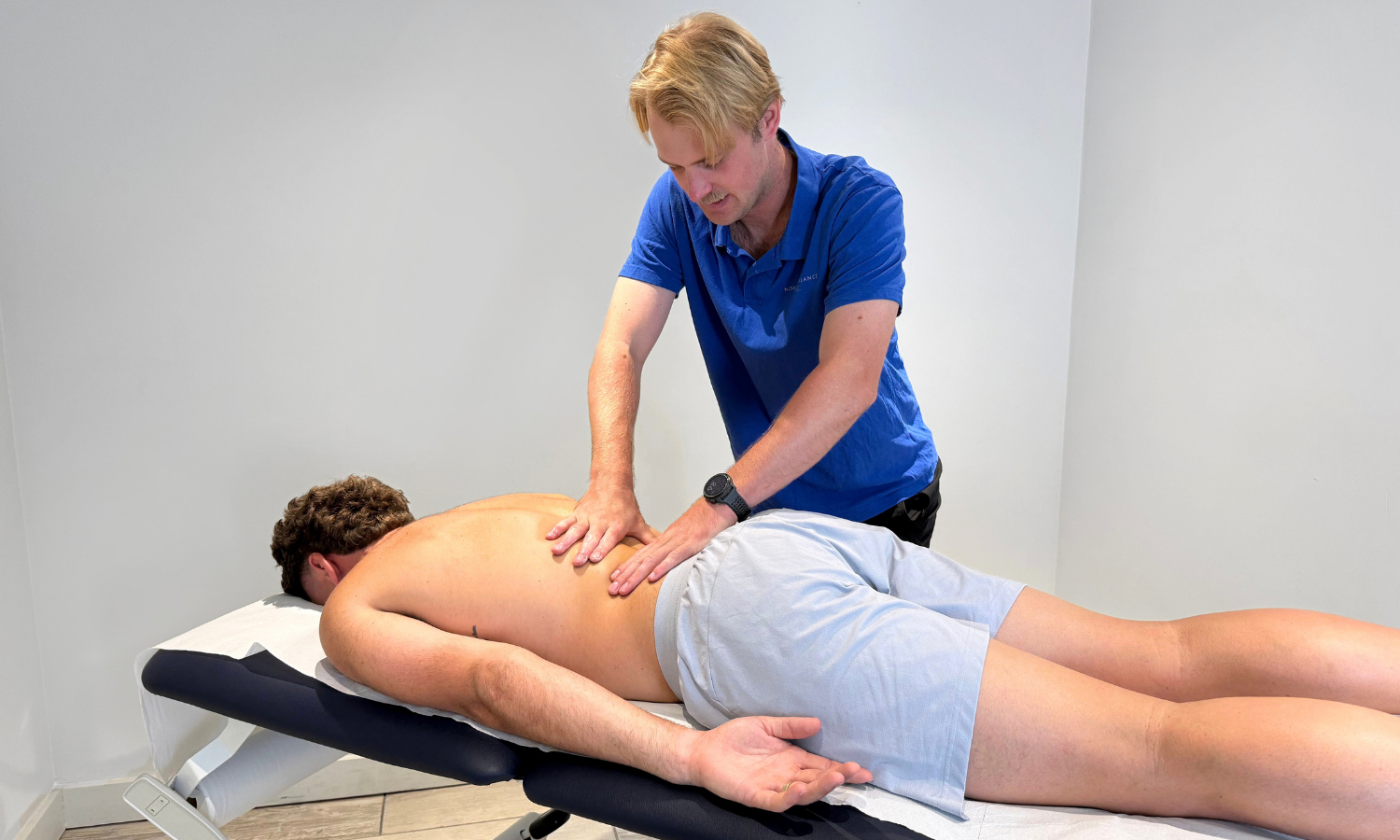
The priority was restoring as much useful knee movement as possible. Hands-on treatment and joint mobilisation were used alongside exercise to improve movement, before strength was progressively rebuilt from the core through the hips and legs. As the knee became more capable, the exercise programme became more demanding. The progression was deliberate. The aim was not simply to make the knee stronger, but to build enough capacity for walking, teaching, gym training and eventually tennis.
Rebuilding confidence after years of knee problems
Physical recovery was only part of the challenge. After decades of problems with the same knee, the patient had become understandably cautious about certain movements. Sam’s assessment identified heightened pain and some avoidance of movement, meaning confidence needed to be rebuilt alongside strength and mobility.
Progressively exposing the knee to more movement and load allowed the patient to experience what the new joint could tolerate. Walking without crutches, increasing daily walking distances and returning to teaching all provided practical evidence that the knee was becoming more capable.
Return to exercise post-knee replacement
For this patient, the most meaningful measures were never going to be confined to range-of-motion or strength testing. Regaining full knee extension mattered because walking became easier. Rebuilding leg strength mattered because she needed to demonstrate movement and teach for hours at a time. Increasing walking distance mattered because everyday life was becoming less restricted.
And returning to Pilates mattered because it represented getting a major part of her life back. Seven months after surgery, the patient had returned to her previous working hours, was training in the gym four times a week and was beginning to look beyond basic recovery towards returning to tennis.
Back to teaching Pilates seven months after knee replacement
Seven months into ongoing knee replacement rehabilitation, the patient had:
- Returned to previous working hours as a Pilates instructor
- Progressed to walking without crutches by six weeks
- Regained full active knee extension by eight weeks
- Built back to around 80% of previous walking distances by three months
- Regained knee flexion to around 85% of the unaffected side by six months
- Rebuilt quadriceps strength to around 75% of the unaffected side
- Rebuilt hamstring and glute strength to around 85% or more of the unaffected side
- Returned to gym training four times a week
- Began experiencing longer-term improvements in knee pain
- Continued progressing towards a return to tennis
The recovery is still ongoing, but the biggest change is already happening outside the clinic. The patient is back to her pre-surgery working hours, training regularly, and beginning to work toward activities that were previously out of reach.
For anyone recovering from a total knee replacement, the useful question isn’t just how far the knee bends or how strong it tests. It is whether that progress helps you walk further, work confidently, exercise again, and return to the parts of life that matter to you.
If you’re recovering from a knee replacement and want to return to work, exercise or sport, a physiotherapy assessment at Nordic Balance can help establish where you are now and what the next stage of rehabilitation should involve.