Physiotherapy
 Shockwave Therapy
Patient Profile

Condition / Injury
Plantar fasciitis
Patient type:
Woman, 40's, personal trainer, regular walker and hiker
Treatment duration:
6-monthsHow plantar fasciitis affected everyday Life
Jo has always been physically active. Alongside a regular gym routine and her personal training clients, she would often walk around 15,000 steps a day and was used to challenging hikes. Then a new dog arrived. Daily walking jumped to around 25,000 steps, and much of the summer was spent in flip-flops. Her feet started to feel sore after longer walks, but initially Jo carried on.
The pain gradually became much harder to ignore. Standing after sitting could be extremely painful. On better days, she could hobble to the Tube and get through work despite the discomfort. On worse days, putting weight through her foot became so difficult that she struggled to walk normally. At one point, getting around with her daughter’s scooter felt easier than walking.
What frustrated Jo most was how much the heel pain had started to take away. Long hikes were off the table, walking the dog had become difficult, and even an ordinary working day needed planning.
She tried a steroid injection, which helped temporarily, and attended a few physiotherapy appointments without fully committing to the recommended exercises or changes. As Jo later acknowledged, she had underestimated how much attention the problem needed.
Once it became clear that short-term relief was not enough, the focus shifted to rehabilitation. The aim was to help the foot tolerate more again through progressive strengthening, improved flexibility, footwear changes and better management of walking load.
Physiotherapy Assessment of Plantar Fasciitis
The increase from around 15,000 to 25,000 daily steps was an important part of the picture. The plantar fascia runs underneath the foot from the heel towards the toes and helps the foot manage load during standing and walking. Jo had dramatically increased the amount of work her feet were doing without giving them much time to adapt.
Her footwear added another consideration. Long distances in minimally supportive shoes felt very different from the footwear she would normally choose for a serious hike. Treatment therefore needed to address more than the painful area itself. Jo needed to change some of the demands being placed on her feet while progressively building their ability to cope with walking again.
Treating plantar fasciitis with a multidisciplinary approach
Senior physiotherapist Beth led the rehabilitation. Rather than relying on a single treatment, the plan combined progressive exercise with stretching, footwear changes, podiatry input, and additional treatments such as dry needling and shockwave therapy.
That approach fits with current clinical guidance for plantar heel pain, which supports resistance exercise for the foot and ankle alongside plantar fascia and calf stretching. The same guidance recommends using orthoses as part of a wider treatment programme rather than as a standalone treatment.
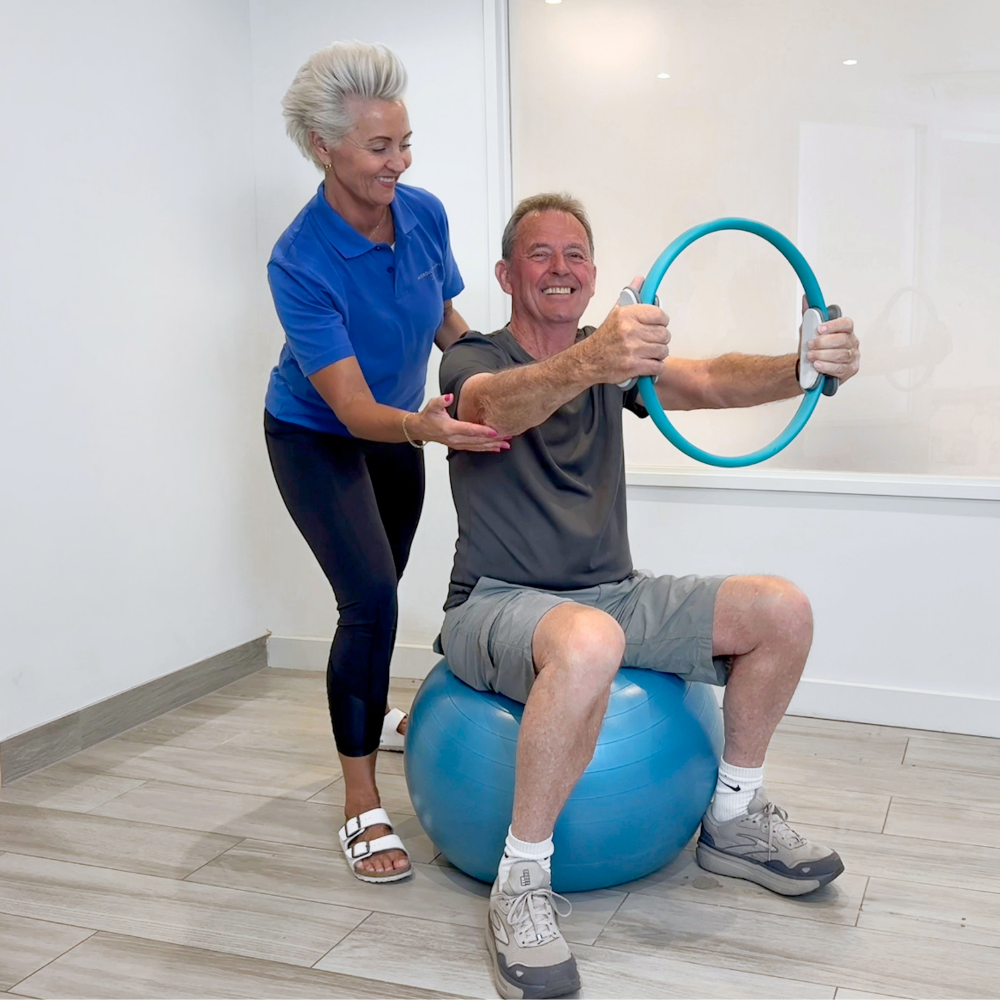
Progressive calf and foot strengthening
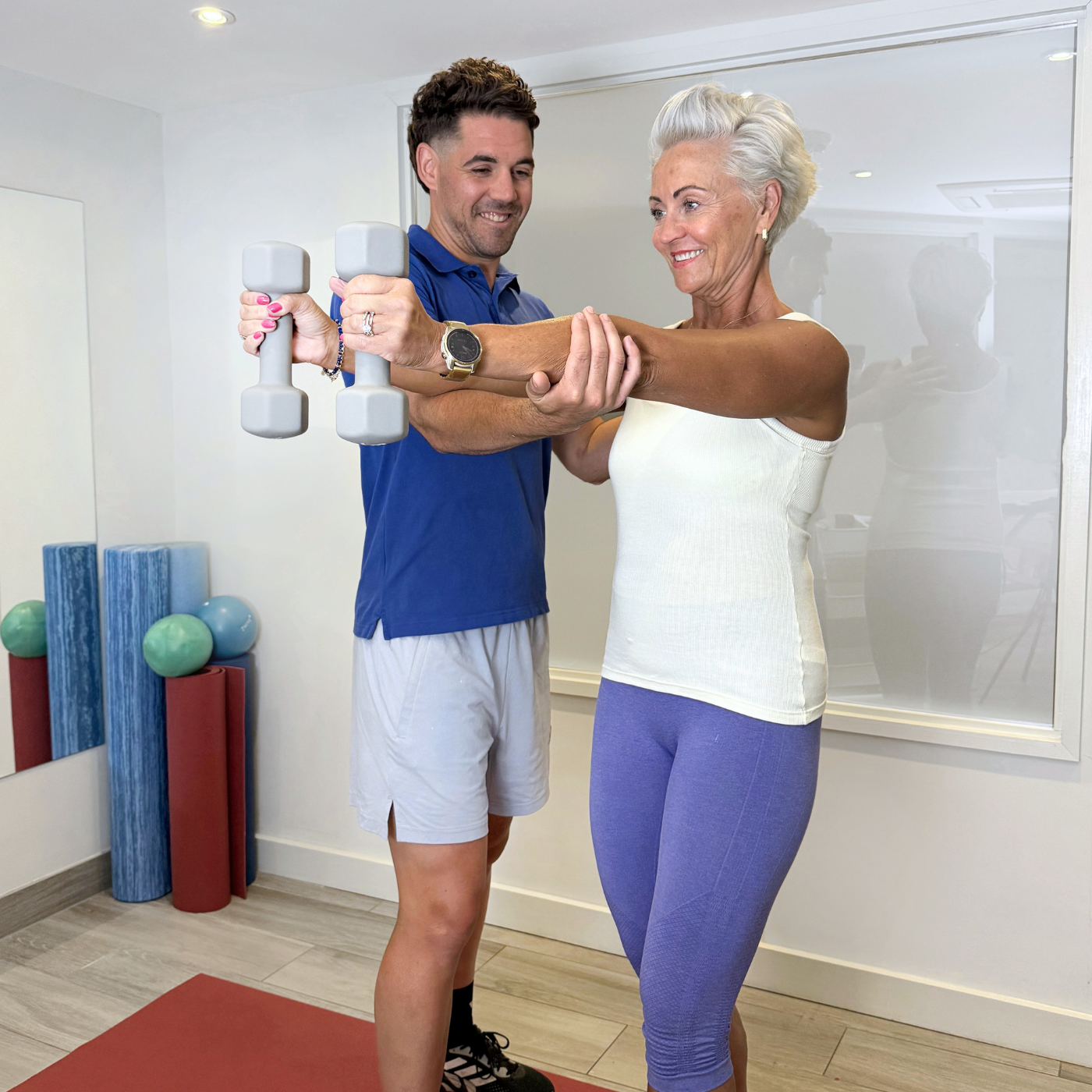
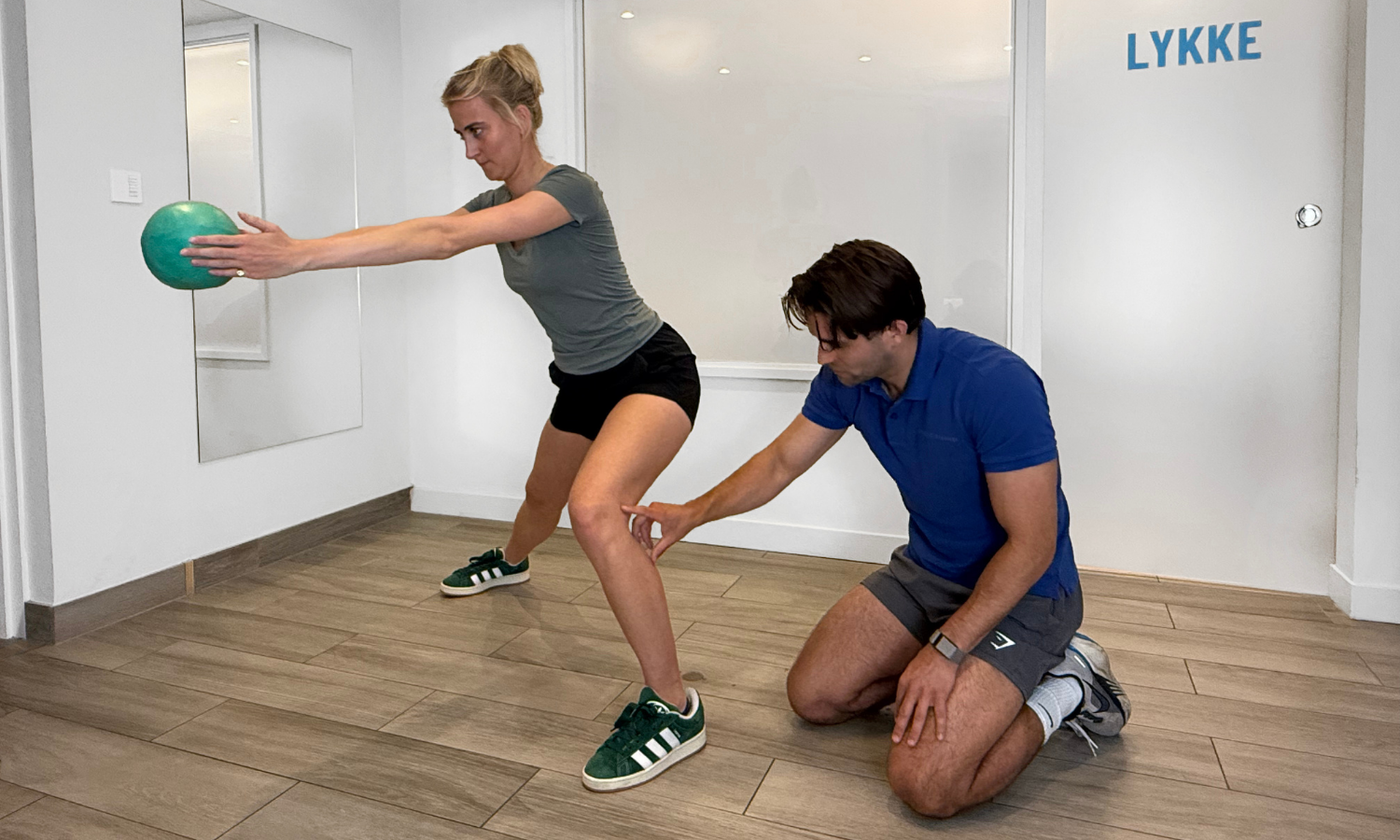
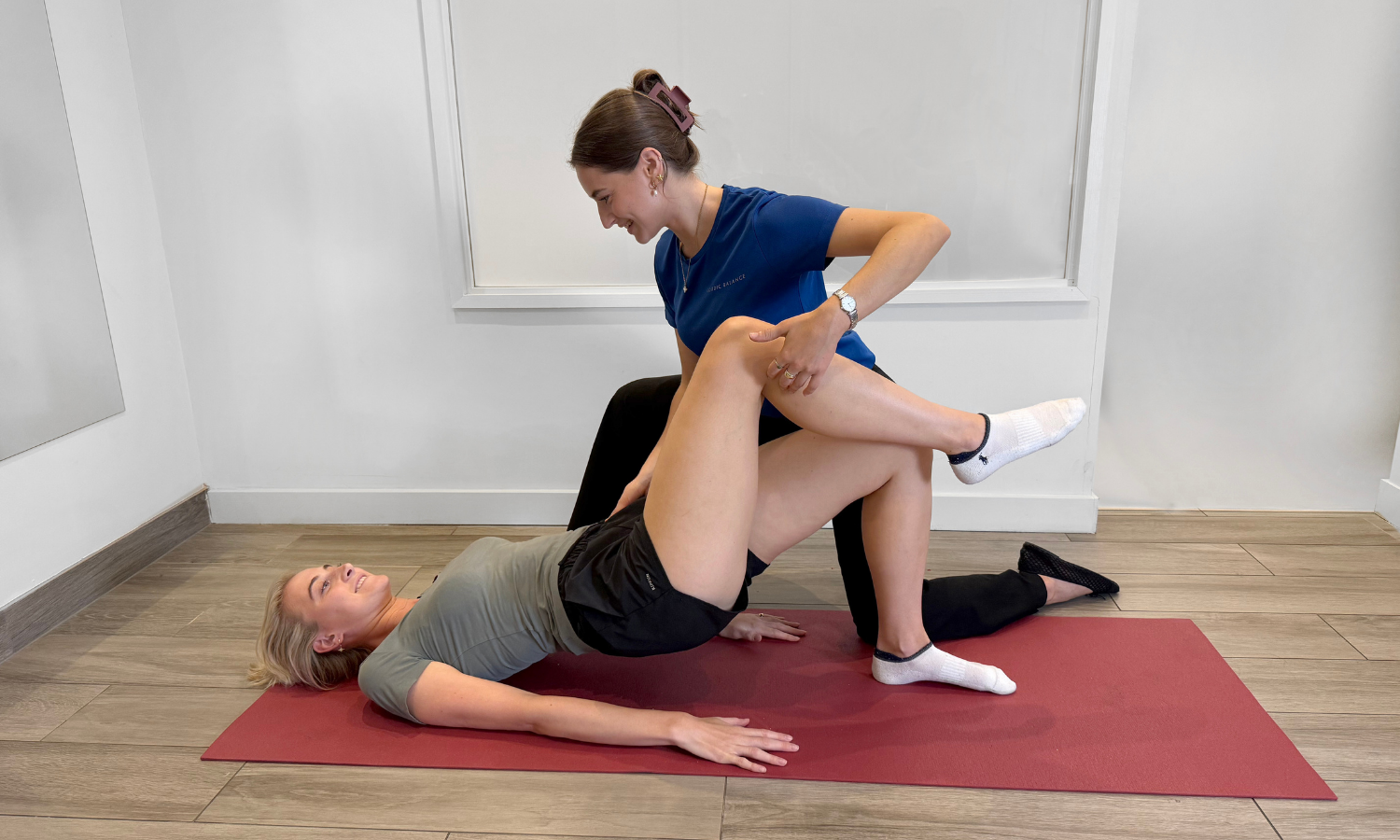
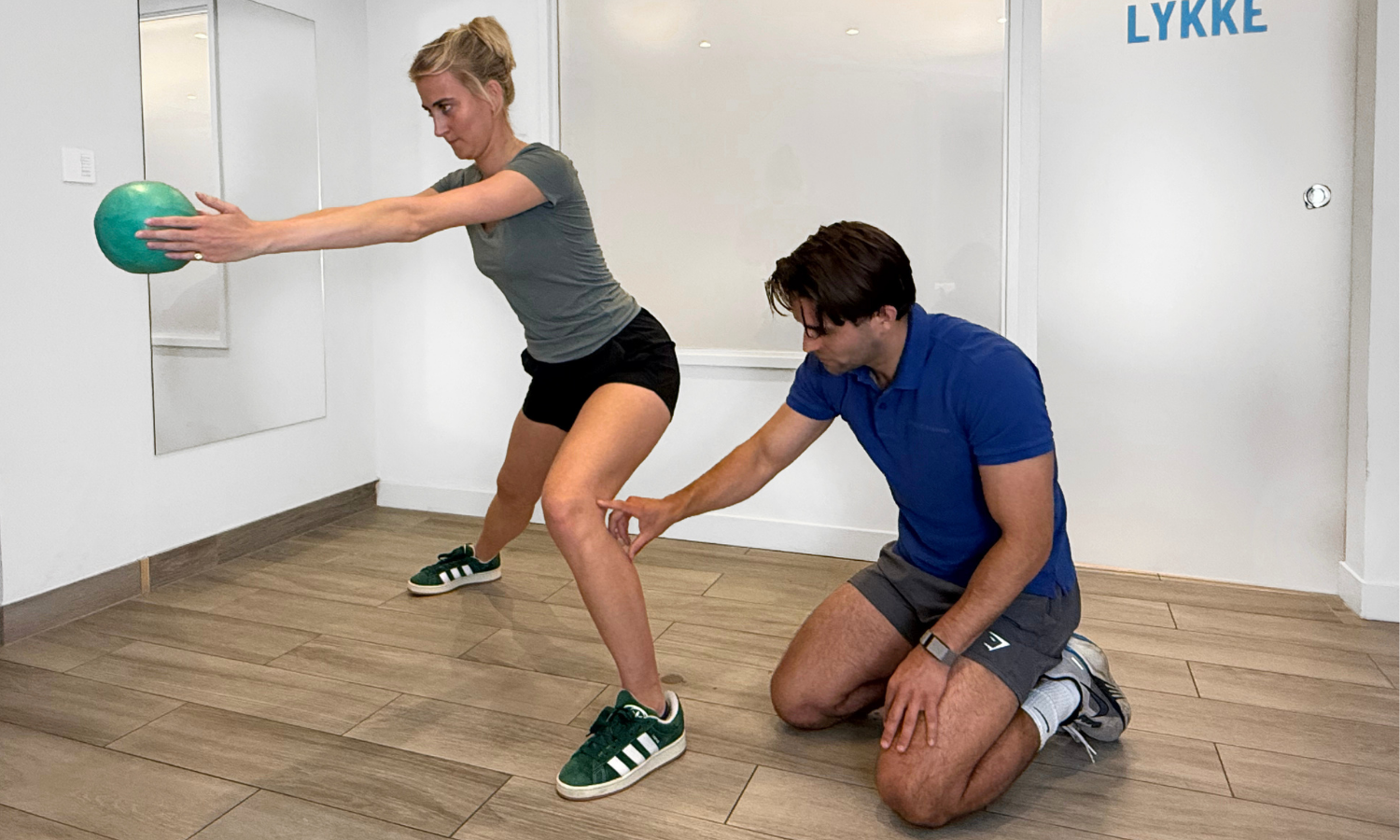
Beth introduced a progressive calf and plantar fascia loading programme. The purpose was to rebuild strength and endurance through the lower leg and foot so that the plantar fascia was not being asked to cope with the demands of thousands of daily steps without enough support from the surrounding muscles. The exercises became progressively more challenging rather than simply keeping Jo away from activity.
Current plantar heel pain guidance supports resistance training through the foot and ankle as part of rehabilitation, alongside stretching for the plantar fascia and calf. For Jo, the reason was straightforward. If she wanted to return to long walks and hiking, her feet needed to handle load better, not simply experience less of it.
Plantar fascia and calf stretching
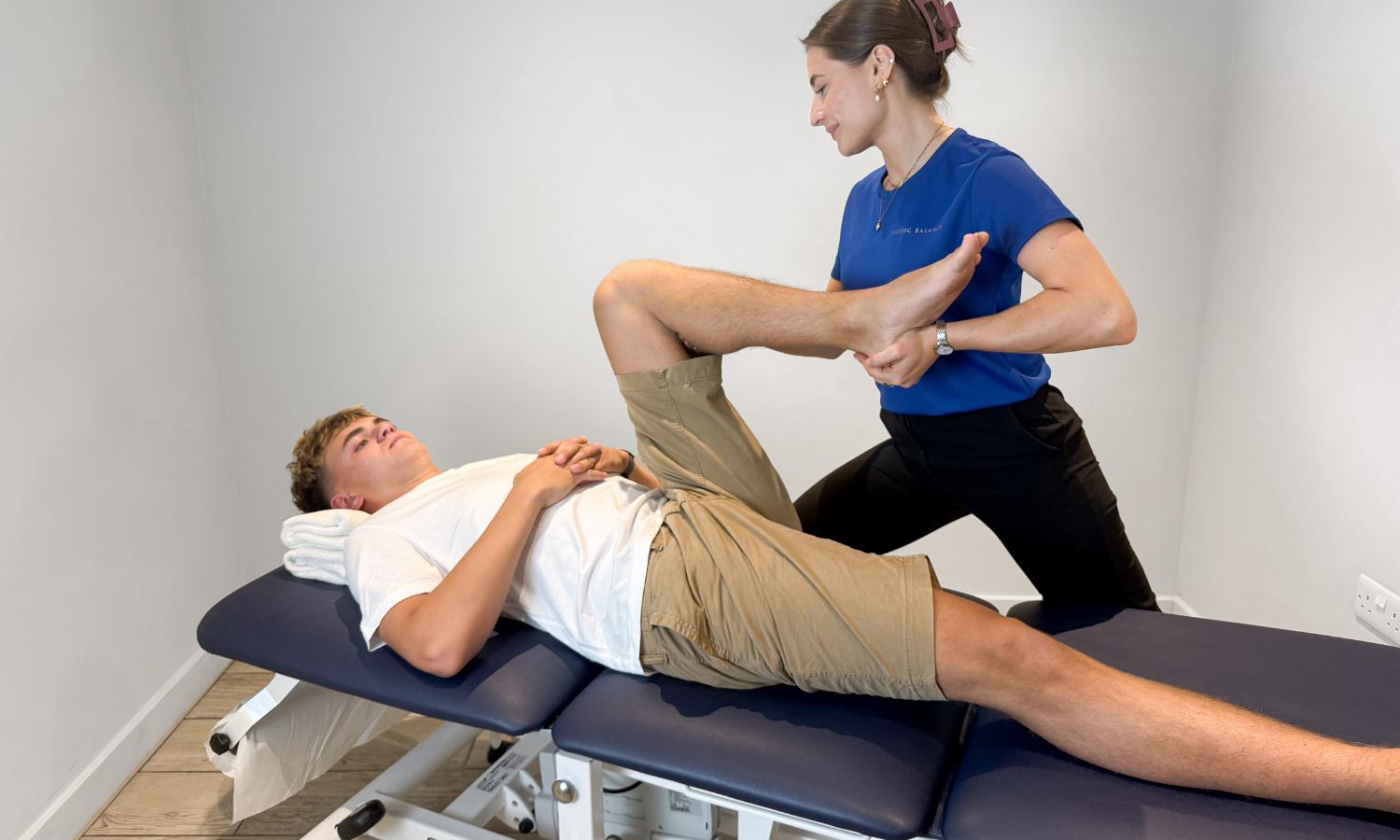
Beth also worked on flexibility through the calf and back of the leg. This was part of the wider plan to improve foot and ankle movement and reduce unnecessary strain during walking. Plantar fascia-specific stretching and calf stretching remain recommended parts of physiotherapy management for plantar heel pain, particularly when combined with strengthening rather than used as the entire treatment.
Supportive footwear and insoles
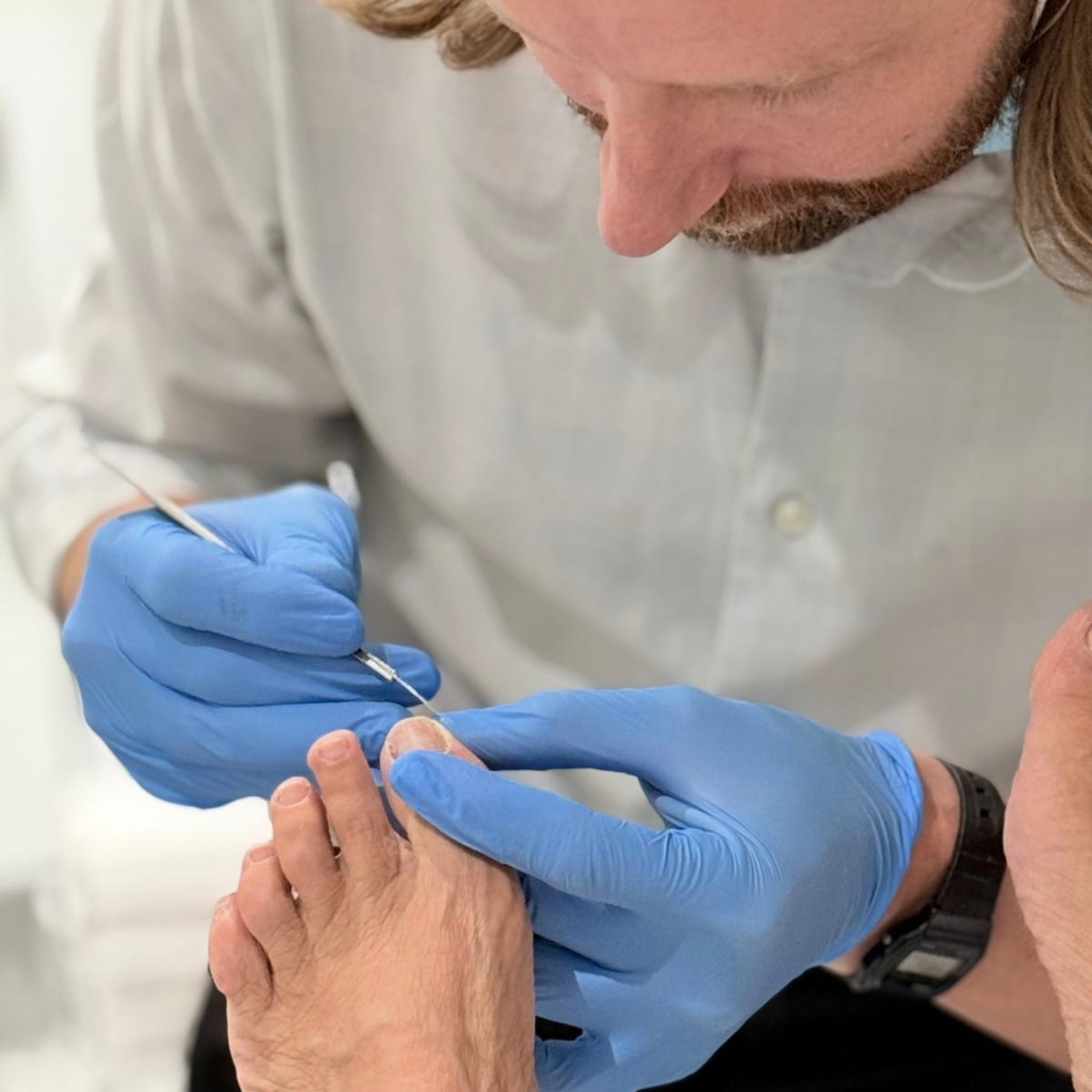
Jo also changed the shoes she used for longer periods on her feet. Podiatry input led to insoles that gave the foot additional support and made walking more manageable as rehabilitation progressed. That did mean making peace with the fact that favourite shoes were not always the sensible choice for a long dog walk.
But the insoles were not treated as the solution on their own. They supported the wider programme while Jo continued rebuilding strength and walking tolerance. That distinction is important. Current guidance supports orthoses alongside other treatment, but advises against relying on them as a standalone short-term treatment for plantar fasciitis.
Dry needling for tight and painful muscles
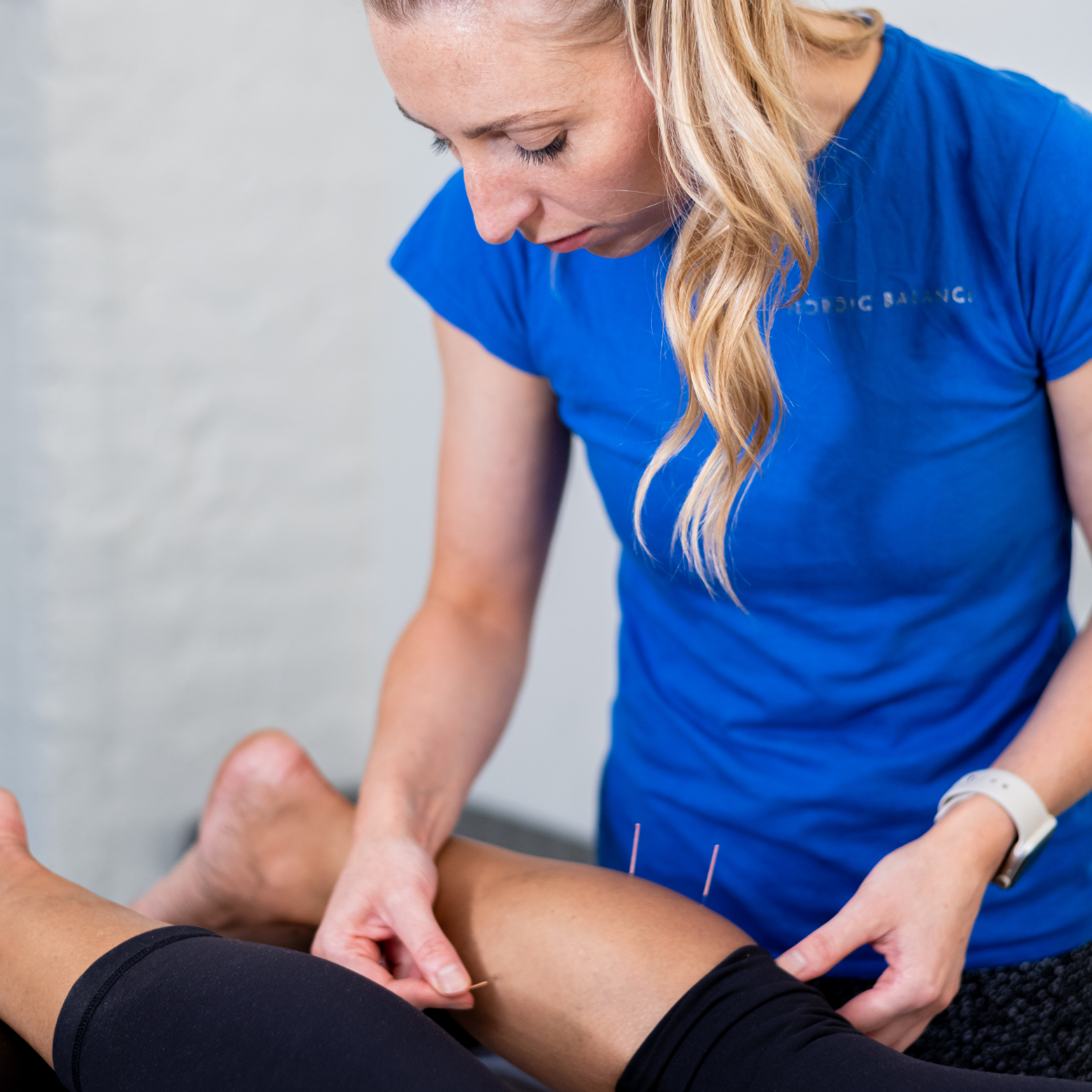
Dry needling was also used alongside the exercise programme to address tight and sensitive muscles in the calf and foot. It gave Beth another way to address areas that were particularly uncomfortable while Jo continued building longer-term physical capacity. Current clinical guidelines include dry needling as an option for relevant trigger points in the calf and plantar muscles for plantar heel pain.
Shockwave therapy for persistent heel pain
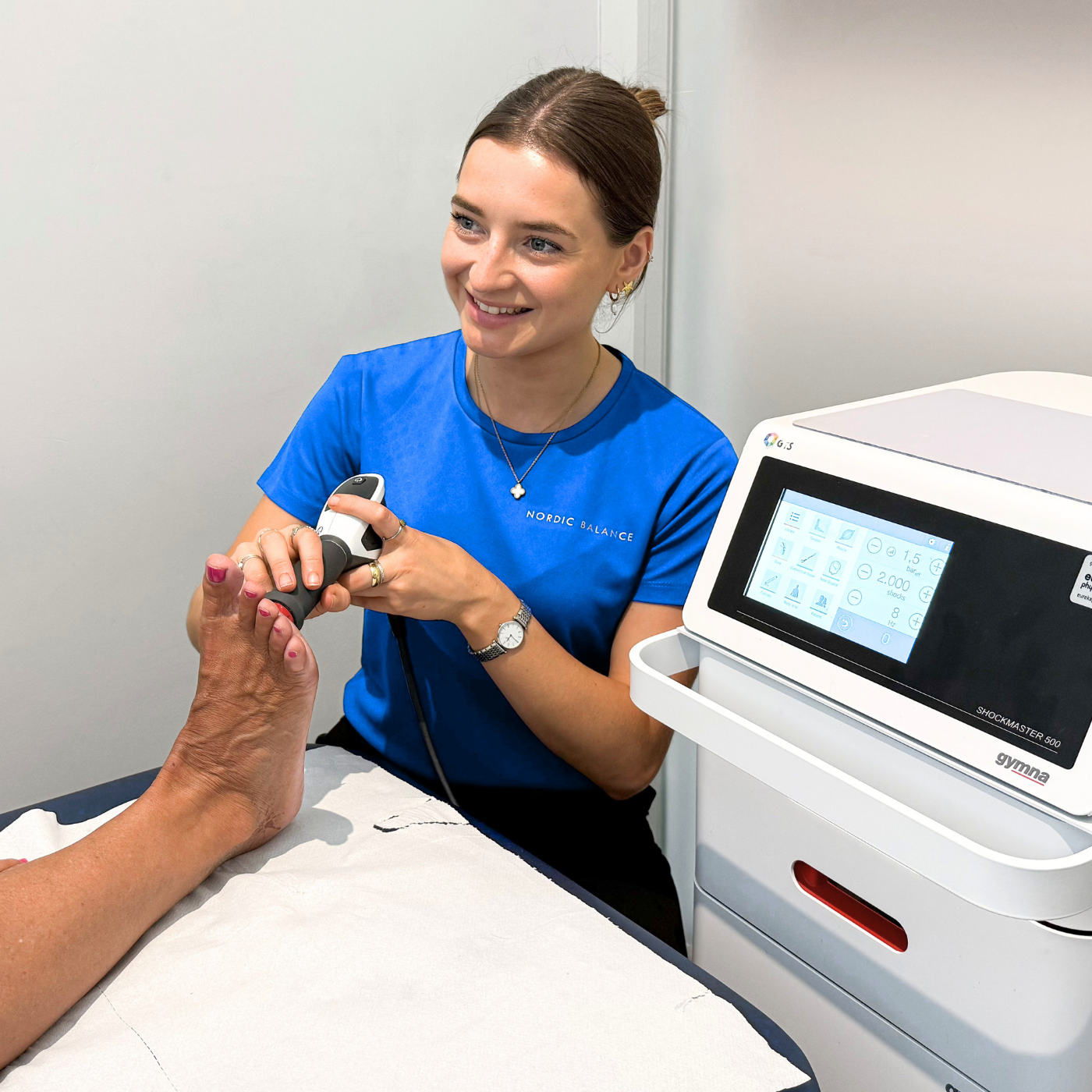
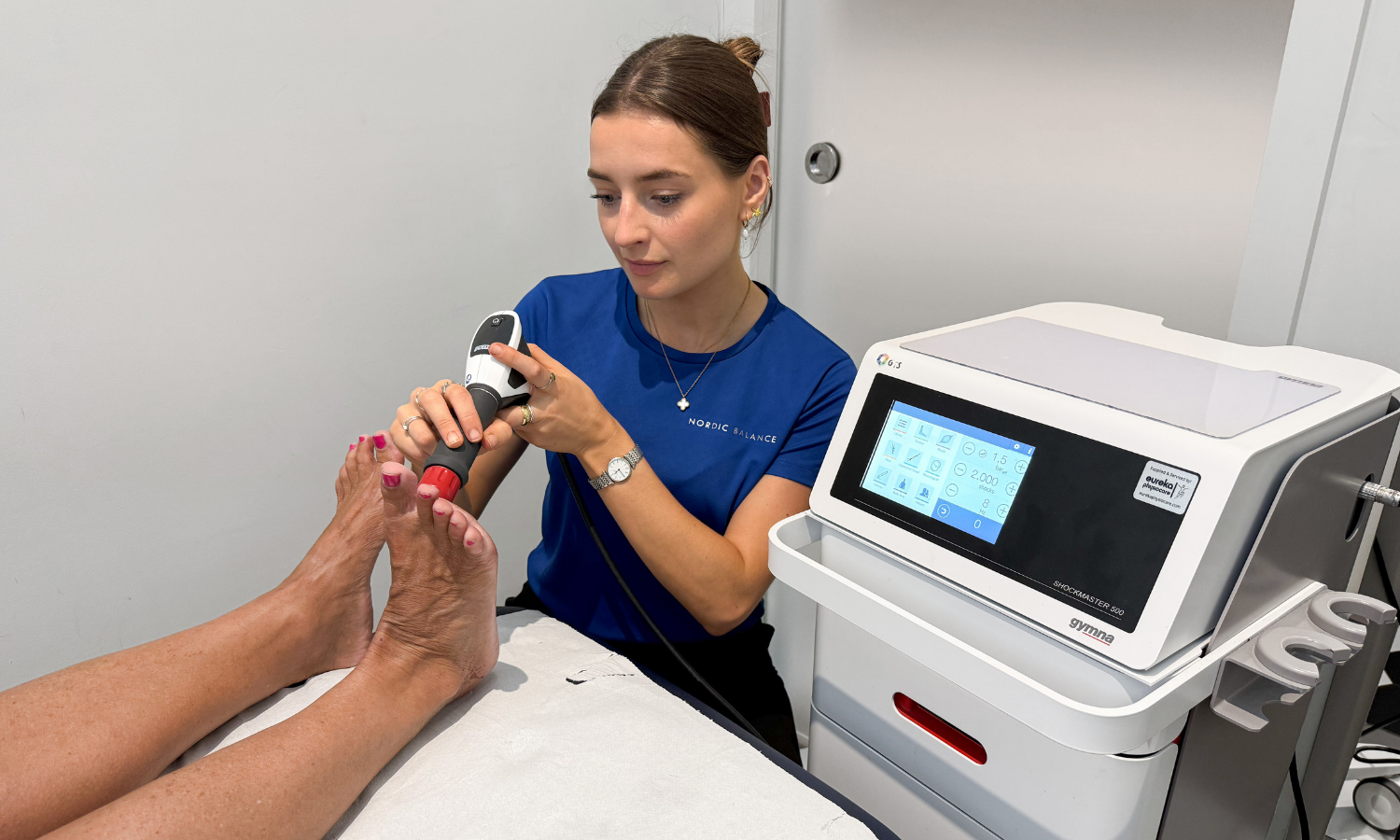
As Jo’s heel pain proved stubborn, shockwave therapy was added to support the wider rehabilitation plan. The treatment uses pressure waves directed into the painful area. Nordic Balance often considers it when a tendon or plantar fascia problem has not progressed as expected with conservative care alone. For Jo, it sat alongside strengthening, physiotherapy, podiatry and footwear changes rather than replacing them.
Six Months of Plantar Fasciitis Rehabilitation
-
0-12 Weeks: Reducing Inflammation
Within the first 12 weeks, Jo was already feeling a meaningful difference. Heel pain was becoming less intrusive, and walking was more manageable. The combination of regular physiotherapy, progressive exercise, better footwear and the wider treatment plan was beginning to carry over into everyday life.
That early change mattered. After reaching a point where an ordinary walk or journey to work could be difficult, being able to spend more time on her feet comfortably represented genuine progress. But 12 weeks was not the end of rehabilitation. The next goal was making sure those improvements could hold up as Jo gradually asked more of the foot again.
-
Weeks 12–26: Building Strength and Tolerance in the Foot
Treatment continued across six months, with the rehabilitation programme becoming more demanding as the foot became more capable. Strength and endurance through the foot and lower leg continued to develop, while Jo became more confident about increasing the amount of walking she was doing.
Footwear and insoles helped make longer periods on her feet more manageable, while physiotherapy kept the focus on building what the foot needed rather than simply avoiding whatever caused discomfort. Over time, the balance shifted. The heel was no longer dictating every decision. Walking became easier, and more of Jo’s usual activity became possible again.
Walking comfortably after six months of plantar fasciitis treatment
Over six months of treatment, Jo moved from struggling to put weight through her foot to walking more comfortably and returning to activities that had disappeared from her routine.
Treatment outcomes:
- Noticeable improvement in heel pain within 12 weeks
- Walking became more comfortable and less limited by pain
- Improved tolerance for longer periods on her feet
- Rebuilt strength and endurance through the foot and lower leg
- Returned to more of her usual day-to-day activity
Perhaps the biggest change was not one treatment or one exercise. It was taking the problem seriously enough to give the foot what it needed. Jo had gone from carrying on through soreness, increasing her walking dramatically and hoping the pain would settle, to following a structured rehabilitation plan that addressed both the symptoms and the demands she wanted her feet to handle.
For someone whose normal life involved dog walks, long days on her feet and proper hikes, that mattered far more than a short period of pain relief. The lesson from this case is not that everyone with plantar fasciitis needs the same combination of treatments. It is that treatment needs to reflect what is limiting the individual and what they need their feet to cope with again.
If plantar fasciitis or heel pain is making walking, work, exercise or sport more difficult, an assessment at Nordic Balance can help identify what is contributing and build a treatment plan to help you move more comfortably again.