
“Are you sure you won’t snap my neck?” “What if you paralyse me?” If you’re considering chiropractic treatment, you may have wondered the same thing. These concerns are understandable, especially when the cracking sound can make a neck adjustment seem more dramatic than it is.
Clinically known as cervical manipulation, a neck adjustment is one of several techniques a chiropractor may use to reduce neck pain or stiffness and improve movement. Not every client needs it, and your chiropractor will first assess whether it is appropriate for you. Despite the name “neck cracking”, your bones are not snapping or breaking. The sound comes from changes within the joint as it moves.
This guide explains what actually happens during a neck adjustment, where the cracking sound comes from, how cervical manipulation may help and how your chiropractor determines whether it is suitable for you.
What happens when a chiropractor cracks your neck?
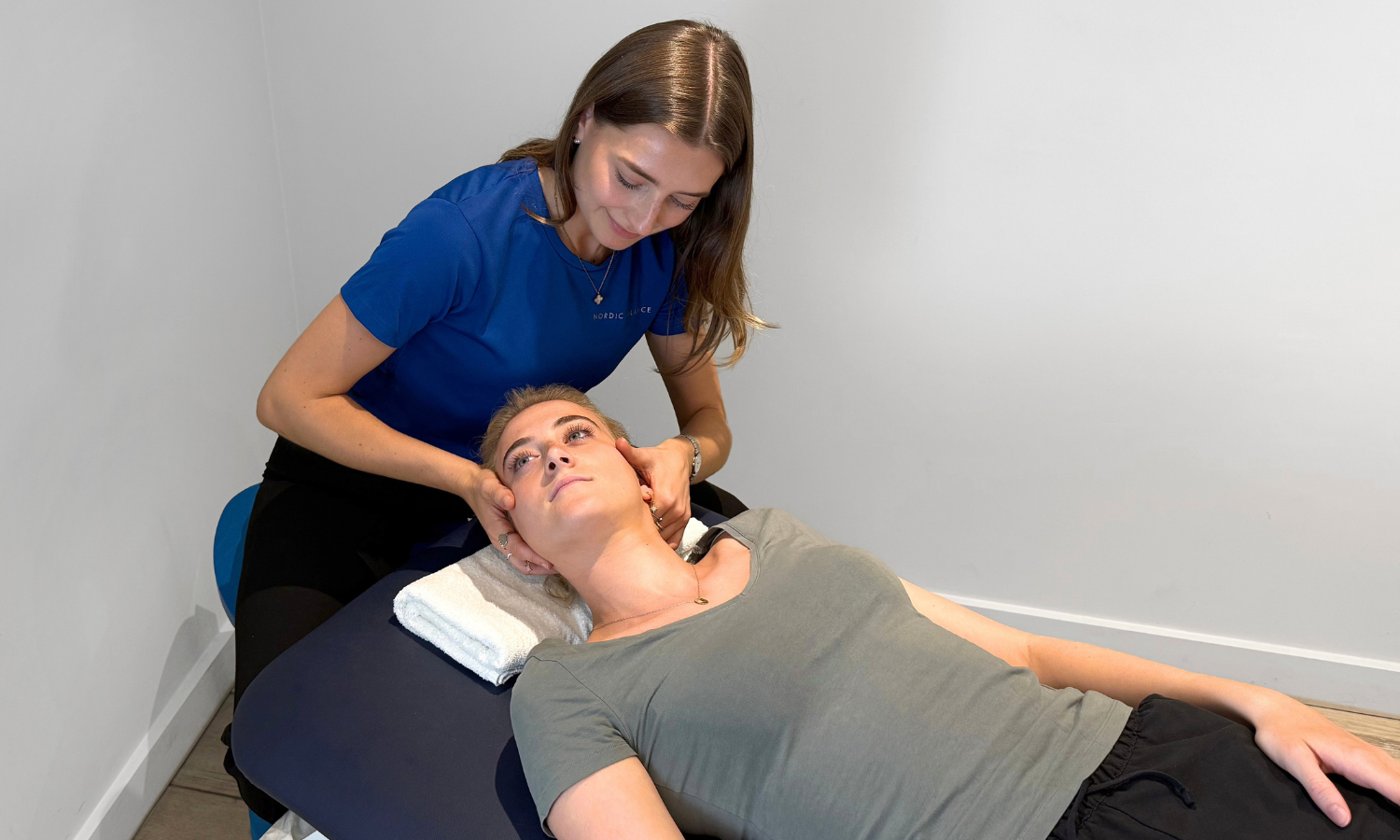
The proper term for chiropractic neck cracking is cervical manipulation or a cervical adjustment. During treatment, your chiropractor will assess your neck and identify joints where movement may be restricted. If cervical manipulation is appropriate, they may use a quick, controlled movement known as a high-velocity, low-amplitude thrust, or HVLA.
The movement itself is small and precise. The aim is not simply to create the familiar “crack”, but to improve movement in a restricted joint and help reduce pain or stiffness.
What causes the cracking sound?
The sound you sometimes hear during a neck adjustment does not come from bones snapping or breaking. The joints in your spine are surrounded by a capsule containing synovial fluid, which helps the joint move smoothly. When the joint moves during an adjustment, the pressure within it changes and a gas-filled cavity can form. This process, known as cavitation, creates the familiar popping or cracking sound.
The sound itself is not the purpose of the treatment. An adjustment does not need to produce a dramatic crack to be useful. Research suggests that whether you hear a “pop” during spinal manipulation does not appear to affect pain improvement. In other words, an adjustment does not need to produce a dramatic crack to be useful.
Is chiropractic neck cracking safe?
Before performing cervical manipulation, your chiropractor will assess your symptoms, medical history and neck to determine whether the technique is appropriate for you. Tell your chiropractor about any existing neck or spinal conditions, recent injuries, neurological symptoms, or other health conditions, as well as any previous problems after neck treatment. This helps them identify whether cervical manipulation is suitable for you or whether another treatment approach would be more appropriate.
This assessment matters because cervical manipulation is not suitable for every client. If your chiropractor identifies symptoms, risk factors, or other reasons manipulation may not be appropriate, they will adapt your treatment rather than perform the adjustment. As with any treatment, cervical manipulation is not completely without risk. Your chiropractor will assess whether it is appropriate for you and discuss the treatment before going ahead.
If you feel nervous about having your neck manipulated, tell your chiropractor. Cervical manipulation is only one treatment option, and your treatment can be adapted if it is not suitable for you or you do not feel comfortable with it.
What are the benefits of cervical manipulation?
Cervical manipulation helps improve movement in stiff or restricted joints and reduce neck pain. The quick, controlled movement of an adjustment can affect how the joints and surrounding muscles respond, helping the neck move more freely. For some clients, this can mean less pain and an improved range of movement. Cervical manual therapy may also be part of treatment for certain types of headaches associated with the neck, whiplash-related neck pain, and symptoms such as brain fog.
When cervical manipulation should be avoided
Cervical manipulation isn’t appropriate for everyone. Avoid it if you have signs of vascular problems, spinal instability or fracture, progressive neurological symptoms, or conditions that significantly weaken the bones or affect the cervical spine. A thorough assessment helps determine whether it is a safe and suitable option.
Cervical manipulation is only one technique a chiropractor can use. If your assessment suggests it is not appropriate for you, your chiropractor can adapt your treatment. Depending on your symptoms, this may include stretching, traction, massage, mobilisation, exercise or medical acupuncture.
The aim is not simply to make your neck crack. It is to understand what is contributing to your pain or stiffness and choose an appropriate treatment approach for you. At Nordic Balance, our chiropractors assess your symptoms and movement before recommending treatment, so your care can be tailored to what your neck needs and what you feel comfortable with.
Find out more about chiropractic treatment at Nordic Balance and book an appointment at your nearest Nordic Balance clinic.