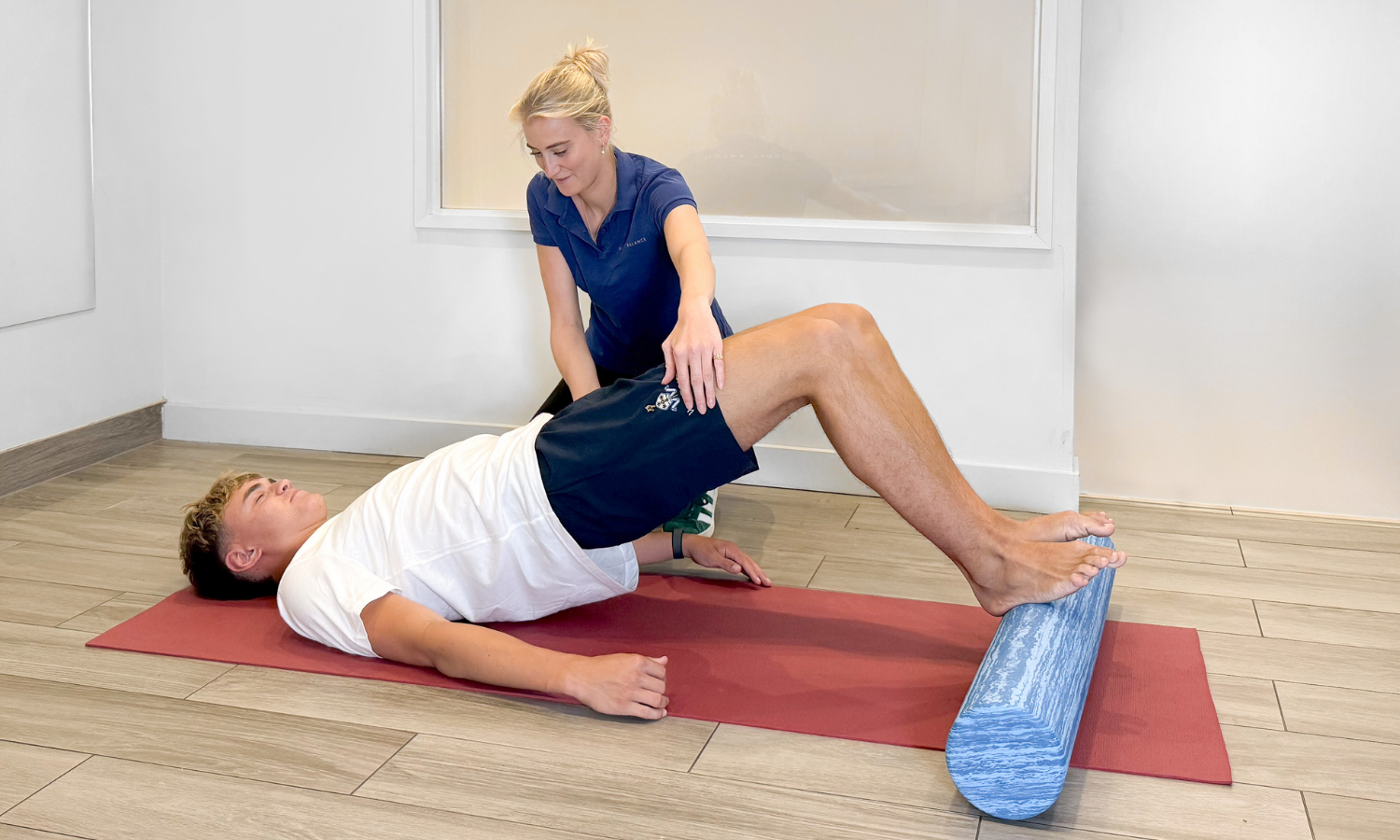
Foam rolling can help when you feel stiff before training, sore after a harder session, or simply want to move a little more freely. What it cannot do is “break up” fascia, fix an injury, or guarantee you stay injury-free. The useful bit sits somewhere in the middle.
Research supports short-term improvements in range of movement and some reduction in post-exercise soreness, without evidence that sensible foam rolling harms strength or performance. More ambitious claims around injury prevention, performance enhancement and “releasing adhesions” are much less certain.
This guide explains how to use a foam roller practically, where it can earn a place in your training and when something more than rolling may be needed.
Quick Links
- Benefits of foam rolling
- Foam rolling before training
- Foam rolling after training
- How long should you foam roll?
- How much pressure should you use?
- Foam rolling different areas of the body
- What foam rolling cannot fix
- Stop Rolling If Pain Keeps Coming Back
- When You Should Avoid Foam Rolling
- Does Foam Rolling Prevent Injury?
- Keep the Roller in Perspective
Benefits of Foam Rolling
The clearest benefit of foam rolling is that it can temporarily help you move through a greater range of motion. That can be useful if, for example, your calves feel stiff before a run or your hips feel reluctant to move after a day at a desk. It may also make muscles feel less sore following strenuous exercise. A 2024 review of 16 studies found foam rolling reduced exercise-related muscle soreness, with the effects becoming more noticeable over the following 24–72 hours.
Rather than treating foam rolling as something every training programme must contain, think of it as an optional tool for:
- Improving short-term mobility
- Making stiff muscles feel more comfortable
- Easing some post-training soreness
- Helping you prepare an area to move before exercise.
If it helps, use it. If you move well and feel ready to train without it, there is no prize for spending another ten minutes on the floor.
Foam Rolling Before Training
Foam rolling can work well as a short addition to a warm-up. If a particular area feels restricted, a brief rolling session may help you access more movement before you train. Current evidence supports an immediate improvement in range of motion, and recent research also suggests foam rolling can help with short-term ankle mobility.
But there is an important caveat. A 2024 review comparing foam rolling and stretching with other warm-up activities found they were not clearly superior to options such as walking, cycling or active exercise for improving flexibility immediately before activity. So if you are about to run, squat or play tennis, your warm-up should still prepare you for running, squatting or playing tennis. Foam rolling can open the door. Active movement still needs to take you through it.
Using a Foam Roller Before Training
Choose the one or two areas that actually feel restricted. Roll them briefly, then move into an active warm-up that gradually introduces the movement, speed and load your session will require. Use the roller to support movement, not to delay the point at which you actually start moving.
Foam Rolling After Training
This is probably where many people find foam rolling most useful. Hard training can leave muscles feeling heavy or tender for a day or two. Foam rolling may take some of the edge off that soreness, particularly during the 24–72 hours following exercise. That does not necessarily mean it speeds up damaged muscle repair. It means you may feel more comfortable while recovery takes place.
Choose the areas that have worked hardest, keep the pressure tolerable and stop once you feel you have achieved something useful. There is little value in turning your recovery session into another physical challenge.And remember what does most of the recovery work: appropriate rest, sleep, nutrition and managing your next training load sensibly.
How Long Should You Foam Roll?
There is no scientifically established perfect dose for everyone. Research protocols vary considerably, which is why we avoid rigid rules such as “every muscle must be rolled for exactly two minutes”.
For everyday use, start with about 30–60 seconds on an area to see whether rolling helps. You can repeat it if helpful.
If you enjoy a slightly longer session after training, that is fine too. Older reviews have found benefits with about 90–120 seconds per muscle group, but longer isn’t automatically better. Your goal is a useful change in how you feel or move — not hitting a stopwatch target.
How Much Pressure Should You Use When Foam Rolling?
Enough to feel pressure. Some discomfort over a sensitive muscle is normal, but foam rolling should remain controllable. You should still be able to breathe normally and keep the rest of your body reasonably relaxed.
If you are:
- holding your breath
- tensing your whole body
- getting sharp or burning pain
- experiencing pins and needles or electrical sensations
- feeling worse as you continue, then reduce the pressure or stop.
A harder roller does not automatically produce a better result.
If you are new to foam rolling, a smoother roller with some give is usually easier to use. As you become more comfortable, you can increase pressure through your body position rather than moving immediately to the firmest roller available.
Foam Rolling Different Areas of the Body
You do not need a complicated technique. Move slowly across the muscle, use your arms or opposite leg to control how much weight you put through the roller, and adjust your position if you find something that feels particularly sensitive.
Calves
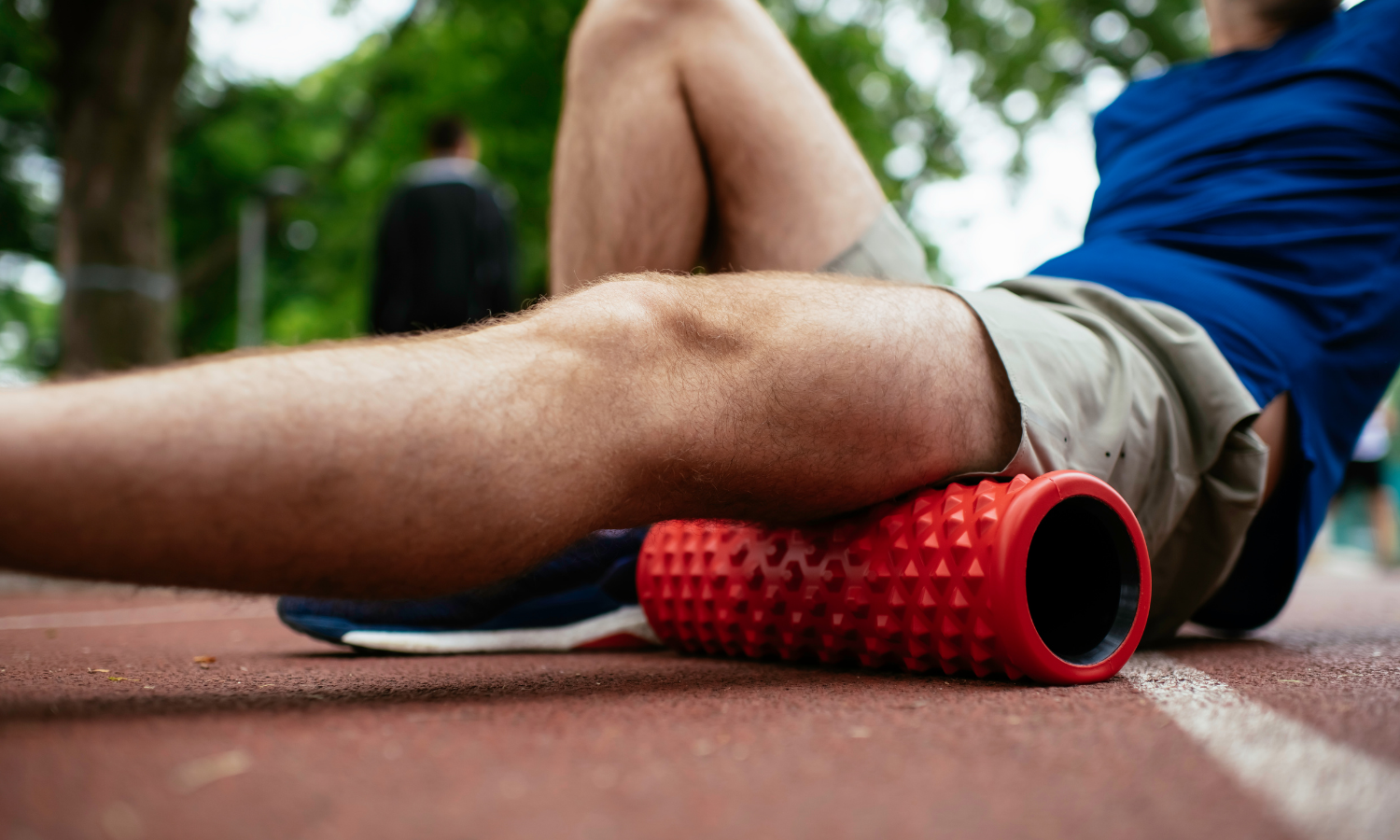
Sit with the roller underneath the calf and support yourself with your hands. Roll between the ankle and just below the knee, slowly turning the leg to reach different parts of the muscle. Start with less body weight. If that feels comfortable, you can place one leg over the other to increase pressure. This can be particularly useful before running if the calves feel stiff.
Quads
Lie face down with the roller underneath the front of the thigh. Support yourself through your forearms and roll from the upper thigh towards just above the knee. Turning slightly towards either side allows you to reach different parts of the quadriceps rather than repeatedly rolling one strip of muscle.
Hamstrings
Sit with the roller underneath the backs of the thighs and your hands behind you for support. Move between the lower glute and just above the knee. If both legs together feel too easy, work one side at a time.
Glutes
Sit on the roller and shift your weight slightly towards the side you want to work. Crossing that ankle over the opposite knee can expose different parts of the gluteal area. For more precise pressure, a massage ball may be easier to position than a full roller.
Inner Thigh
Lie partly face down with one leg out to the side and the roller beneath the inner thigh. Control your weight carefully and roll between the upper inner thigh and above the knee. The position can feel awkward initially, so prioritise control rather than forcing more pressure through the area.
Outer Thigh and IT Band
This needs an update from traditional foam-rolling advice. The iliotibial band is a strong piece of connective tissue. We would not describe rolling it as “releasing” or lengthening the IT band.
If the outside of your thigh feels tight, rolling the muscular areas around the lateral thigh and hip may feel useful. But repeatedly grinding into a very painful strip of IT band is unlikely to achieve what older “myofascial release” explanations suggested. Current research does not provide convincing support for the idea that foam rolling physically releases fascial adhesions.
Front and Outside of the Lower Leg
Avoid rolling directly along the shin bone. Position the roller over the muscular areas towards the front or outside of the lower leg and move slowly between the ankle and just below the knee. Because there is less soft tissue here, you may need considerably less pressure than you use on your quads or glutes.
Under the Foot
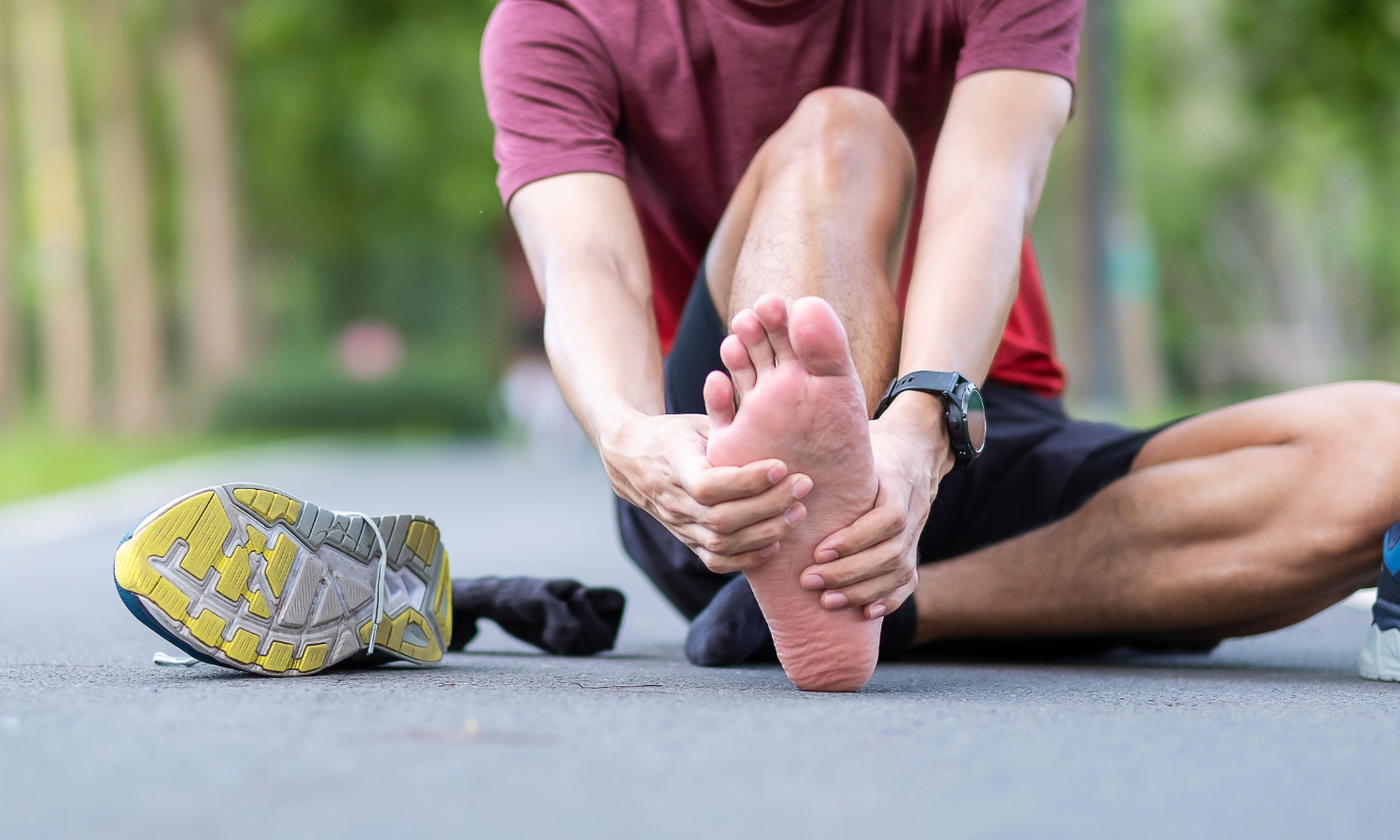
A tennis or massage ball is usually easier to use than a foam roller here. Place the ball beneath the foot and slowly move it around the arch, controlling the pressure by adjusting how much weight you put on it. This may make the foot feel more comfortable temporarily. Persistent heel or arch pain, however, should not become a competition to see how hard you can press into it.
What Foam Rolling Cannot Fix
This is where expectations matter. If the same area repeatedly feels “tight”, the tightness itself may not be the real problem. For example, a calf that constantly needs rolling may be struggling with how much you’re running. A shoulder that repeatedly feels stiff may need strength or movement work. Soreness that never properly settles may be telling you something about training load or recovery. Rolling can change how an area feels.
It does not automatically address:
- Insufficient strength
- Sudden increases in training load
- Poor recovery
- Persistent tendon pain
- A significant muscle injury
- Recurrent joint pain
- Nerve-related symptoms
The physical demands you are not yet ready to tolerate. That is why foam rolling works best as one small part of looking after your body, not the whole strategy.
Stop Rolling If Pain Keeps Coming Back
If rolling makes an area feel better for half an hour but the same problem returns every time you train, you have learnt something useful. You probably need to look beyond the roller. That might mean reviewing your training load, building more strength, changing how you progress activity, or getting an assessment to understand what is actually limiting you. The aim is not to become exceptionally good at managing the same symptom forever. It is to work out what will help you do more with fewer restrictions.
When You Should Avoid Foam Rolling
Foam rolling is generally straightforward for healthy muscles, but direct pressure may not be appropriate in some situations. An international expert consensus identified open wounds and fractures as situations where foam rolling should not be used. The panel also advised caution around conditions including suspected deep vein thrombosis, local tissue inflammation, osteomyelitis and myositis ossificans.
Do not roll directly over:
- A recent fracture
- An open wound
- Unexplained significant swelling
- An area where a blood clot is suspected
- Acutely inflamed or infected tissue
- Sharp or unexplained pain.
If you have a medical condition, a recent injury, or symptoms you don’t understand, get individual advice rather than relying on a foam roller to test the area.
Does Foam Rolling Prevent Injury?
There is currently no strong evidence that foam rolling itself prevents injuries. A 2026 paper comparing common professional beliefs about foam rolling with the research found reasonable evidence for short-term improvements in range of movement and pain, but evidence for injury prevention, performance enhancement and fascial adhesion release remained limited or inconclusive. So foam rolling can absolutely sit within a routine designed to keep you moving well. It just should not carry responsibility for keeping you injury-free. Building strength, progressing training sensibly, allowing enough recovery and developing the capacity required for your sport or activity matter far more.
Keep the Roller in Perspective
Foam rolling doesn’t need an elaborate theory to be useful. If it helps your calf move more freely before a run, use it. If your legs feel more comfortable the day after a hard session, use it. If you simply enjoy spending a few minutes rolling after training, that counts too. Just don’t mistake temporary relief for a fix for every reason an area might feel stiff or sore. Use the roller where it earns its place. Keep moving. Keep building strength. And if something repeatedly stops you from doing what you want to do, find out why. That is the bigger picture behind keeping you mobile and injury-free.