
Recovery is not always easy to judge by how you feel. During treatment, you may have less pain, move more freely or find exercises easier than you did a few weeks ago. Those changes matter, but they do not always show exactly how much your strength or movement has improved.
At Nordic Balance, we use VALD DynaMo to put numbers behind that progress. By measuring strength, grip, and range of motion at different stages of treatment or rehabilitation, we can track how your body changes over time.
That gives you more than a sense that things are improving. You can see what has changed, where further progress is needed and how those results are helping shape the next stage of your treatment.
This guide explains how DynaMo works and how objective measurement can make your progress easier to see, understand and build on.
VALD DynaMo and objective measurement
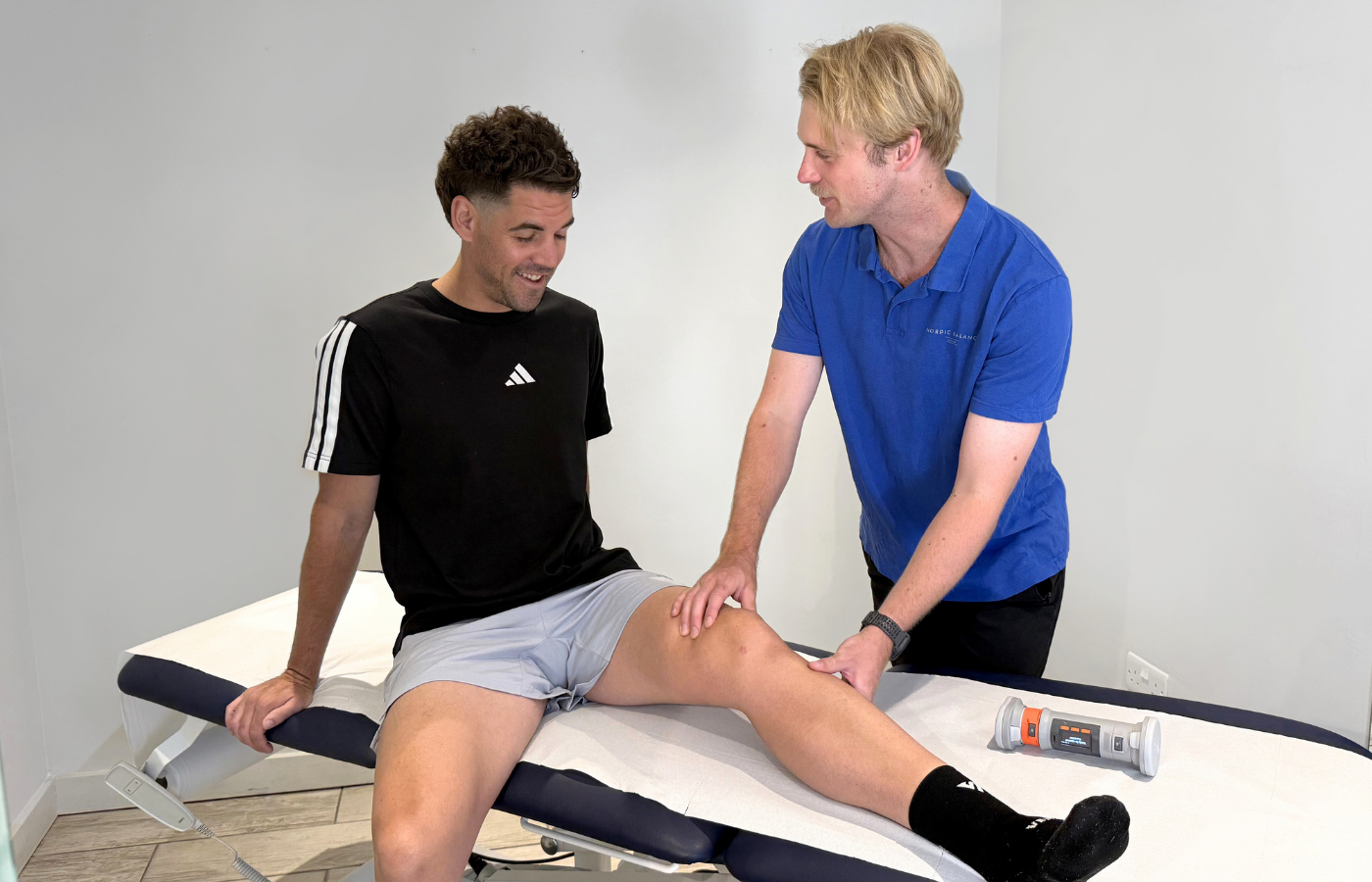
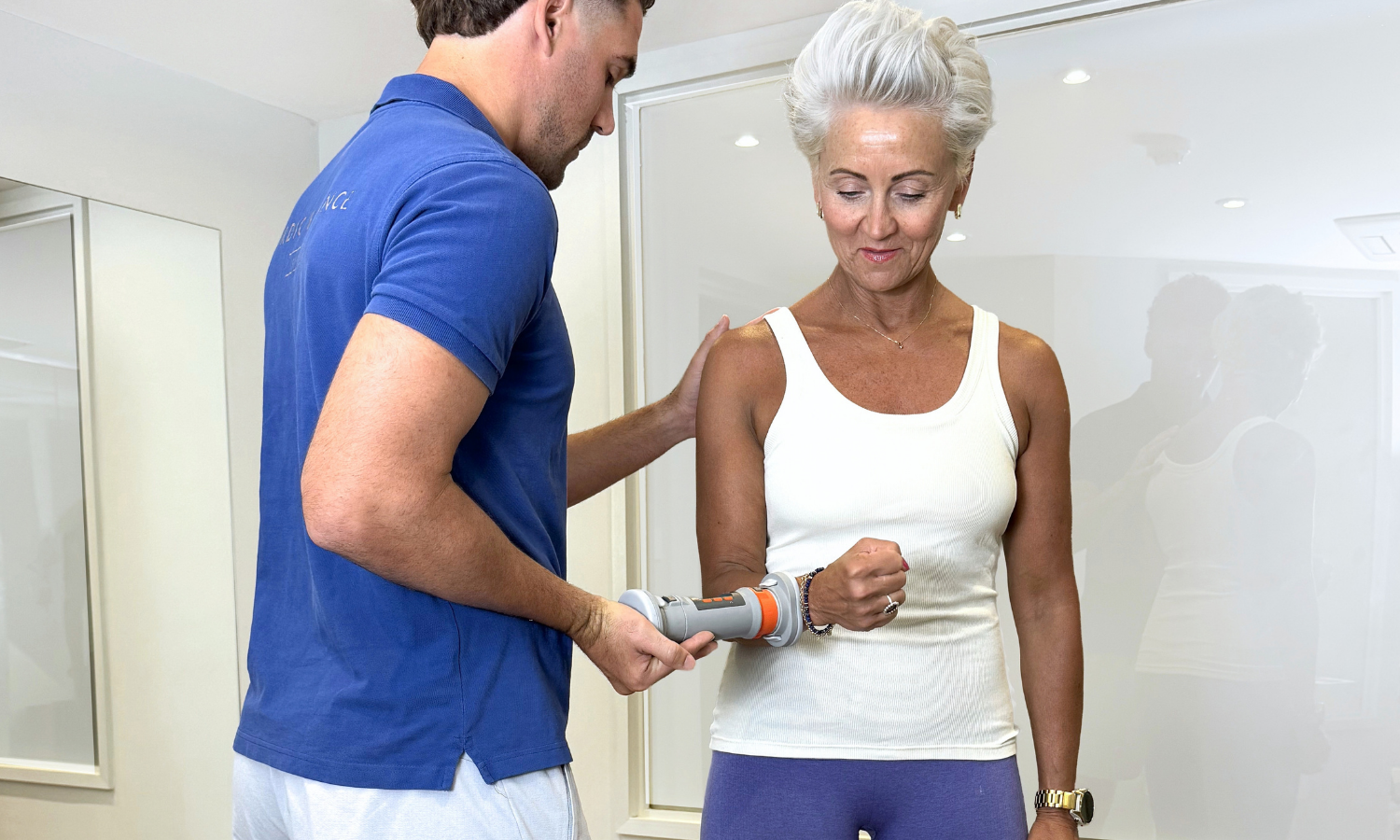
VALD DynaMo is a portable handheld dynamometer and inclinometer that objectively measures strength and range of motion. Rather than relying only on observation or how a movement feels, it gives your therapist measurable data to record and compare.
The DynaMo system can perform hundreds of strength and range-of-motion tests across the body’s major joints. Depending on the test, it can measure pushing and pulling force, grip strength and joint movement. The DynaMo app records results and stores them in your profile so you can review and compare measurements later in your rehabilitation.
The technology is useful, but the numbers are not the point on their own. Their value comes from helping practitioners understand how your body changes over time.
Strength and movement measurements
Depending on what your therapist needs to assess, DynaMo can measure:
- Muscle strength and the amount of force you can produce
- Grip strength
- Joint range of motion
- Differences between sides where comparison is clinically useful
This can reveal progress that is difficult to judge from symptoms alone. For example, your knee may feel much better after an injury, but strength testing might show that one leg still produces less force than the other. Similarly, you may not feel dramatically different from one week to the next, while repeated testing shows your strength steadily increasing.
Both pieces of information matter. How you feel tells us something important about your recovery. Objective measurements give us another way to understand what your body can do right now.
When DynaMo testing can be useful
Objective testing can be especially useful when strength or movement plays a key role in guiding rehabilitation progress.
At Nordic Balance, DynaMo may be used when:
- Recovering from a sports injury
- Rebuilding strength following surgery
- Monitoring muscle weakness after an injury
- Assessing changes in joint movement
- Progressing through exercise rehabilitation
- Preparing to return to running, training or sport
- Comparing strength between sides where relevant
Not everyone needs DynaMo testing. Your therapist will decide whether objective measurement will add useful information to your assessment and treatment plan.
Tracking recovery with objective data
One of the biggest advantages of objective testing is comparing measurements over time. A single number tells us where you are on one particular day. Repeating the same measurement at key points in your rehabilitation shows the direction you are moving in.
Your therapist can use that information to see where strength or movement is improving, where a difference remains and whether your rehabilitation needs to progress or change. It can also make recovery easier for you to understand.
Instead of relying only on “I think this feels stronger”, you may be able to see that the amount of force you can produce has increased or that your range of movement has changed since an earlier assessment. That can be particularly valuable during longer periods of rehabilitation, when day-to-day progress can be difficult to notice.
Research supports handheld dynamometry as an objective method for measuring muscle strength. A 2025 study evaluating VALD DynaMo devices found good reliability across a range of upper- and lower-body strength assessments, although reliability varies by test and how it is performed.
DynaMo results do not replace clinical assessment or tell the whole story on their own. We consider them alongside your symptoms, movement, function and what you need your body to do.
VALD DynaMo at Nordic Balance
At Nordic Balance, DynaMo forms part of a broader approach to measuring progress. We do not judge recovery on pain levels alone. Where appropriate, your therapist can combine how you feel with measurable changes in strength and movement to build a fuller picture of your progress.
Testing is often repeated at different stages of treatment or rehabilitation, giving you meaningful points of comparison rather than relying on memory or guesswork. That might mean seeing how strength develops after surgery, measuring the difference between two sides after an injury, or checking whether your physical capacity is improving as you work toward sport or training. You can feel the progress. DynaMo helps you see it too.
For treatment guided by objective biometric data, book an assessment with Nordic Balance.