Plyometric training is about producing force quickly. Think jumping, hopping, bounding and explosive changes of direction- movements that ask your muscles and tendons to absorb force and then rapidly produce it again.
That makes plyometrics particularly useful for sports involving running, jumping, acceleration and quick changes of direction. But you do not need to be an athlete to benefit. Introduced at the right level, plyometric exercises can build power, coordination, and confidence for faster movement. The key is progression. Jumping higher or moving faster isn’t automatically better if your body isn’t yet ready to handle the landing.
This guide explains how plyometric training works, the benefits it can offer and how to introduce it sensibly alongside your existing strength training.
Plyometric training explained
Plyometric training uses fast, explosive movements to develop your ability to absorb and produce force. When you land from a jump, for example, your muscles and tendons first help control the landing before rapidly contributing to the next movement. The shorter and more effective that transition becomes, the more efficiently you can produce force. This is often described as the stretch-shortening cycle. You experience it naturally during activities such as running, jumping and changing direction. Plyometric training gives you a structured way to develop that ability.
Exercises can range from relatively simple ankle hops to much more demanding bounds, depth jumps and repeated jumping drills. The right starting point depends on your strength, experience and what you are training for.
Benefits of plyometric training
Plyometrics are particularly useful for developing power. Strength is your ability to produce force. Power adds speed to that equation — how quickly you can produce it.
That can matter when you need to:
- accelerate during a run
- jump for a ball
- push quickly away from the ground
- change direction on court
- react to an opponent
- produce more explosive sporting movements
Plyometric exercises can also challenge coordination, balance and control because you need to manage both take-off and landing. Because many exercises use the whole body and several joints at once, they can effectively complement conventional resistance training. Don’t see the two as competing approaches. Strength training helps build the capacity to produce and tolerate force. Plyometric training teaches you to use that capacity more quickly.
Building a foundation for plyometrics
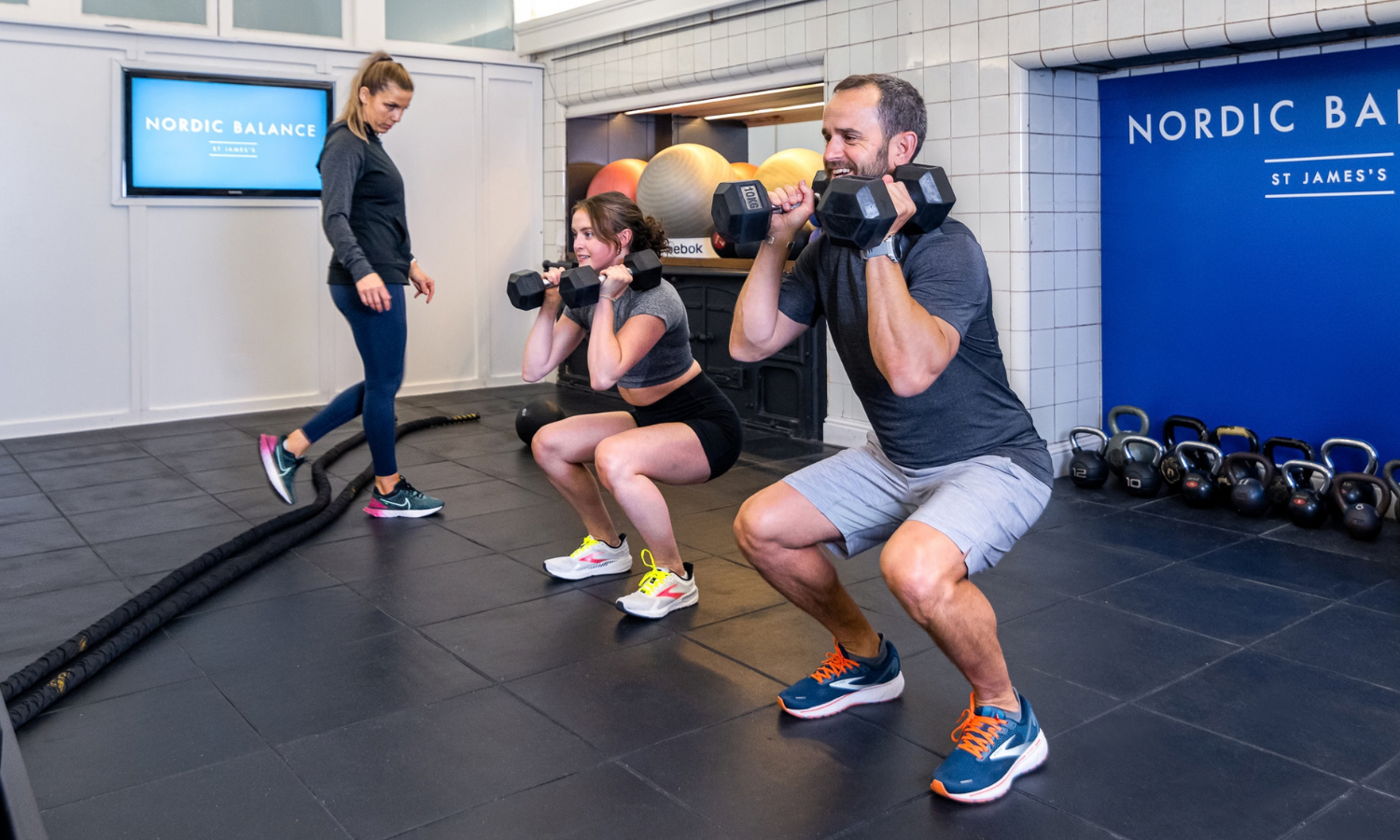
Not everyone needs to begin with box jumps. Before making an exercise faster or more explosive, you need enough strength and control to manage the movement at a slower speed. Squats, split squats, lunges, calf raises and other lower-body strength exercises can all help build that foundation.
Landing ability matters too. Can you jump and land without losing control? Can you manage your knee, hip and ankle position? Can you repeat the movement without your technique changing considerably as you tire? If not, that gives you somewhere useful to start. A beginner might start with small jumps and controlled landings before progressing to greater height, distance, speed or repetition. Plyometric training does not have to look dramatic to be effective.
Plyometric exercises and progressions
The exercise should match both your current ability and the movement you are trying to develop.
Pogo jumps
Start with small, repeated jumps, using your ankles to move quickly off the floor. Keep the movement light and controlled rather than trying to jump as high as possible. This is a useful introduction to repeated ground contact and ankle stiffness.
Squat jumps
Lower into a comfortable squat before driving upwards into a jump. Land under control, reset your position and repeat. Starting with individual repetitions gives you time to concentrate on the quality of each landing before progressing towards repeated jumps.
Lateral hops
Hop from side to side over a small distance. These introduce movement in another direction and can be particularly relevant for sports involving lateral movement and changes of direction. Increase the distance and speed as control improves.
Bounds
Bounding uses exaggerated running-style movements to travel forwards. It requires more force and coordination than smaller jumps, so it usually belongs later in a progression.
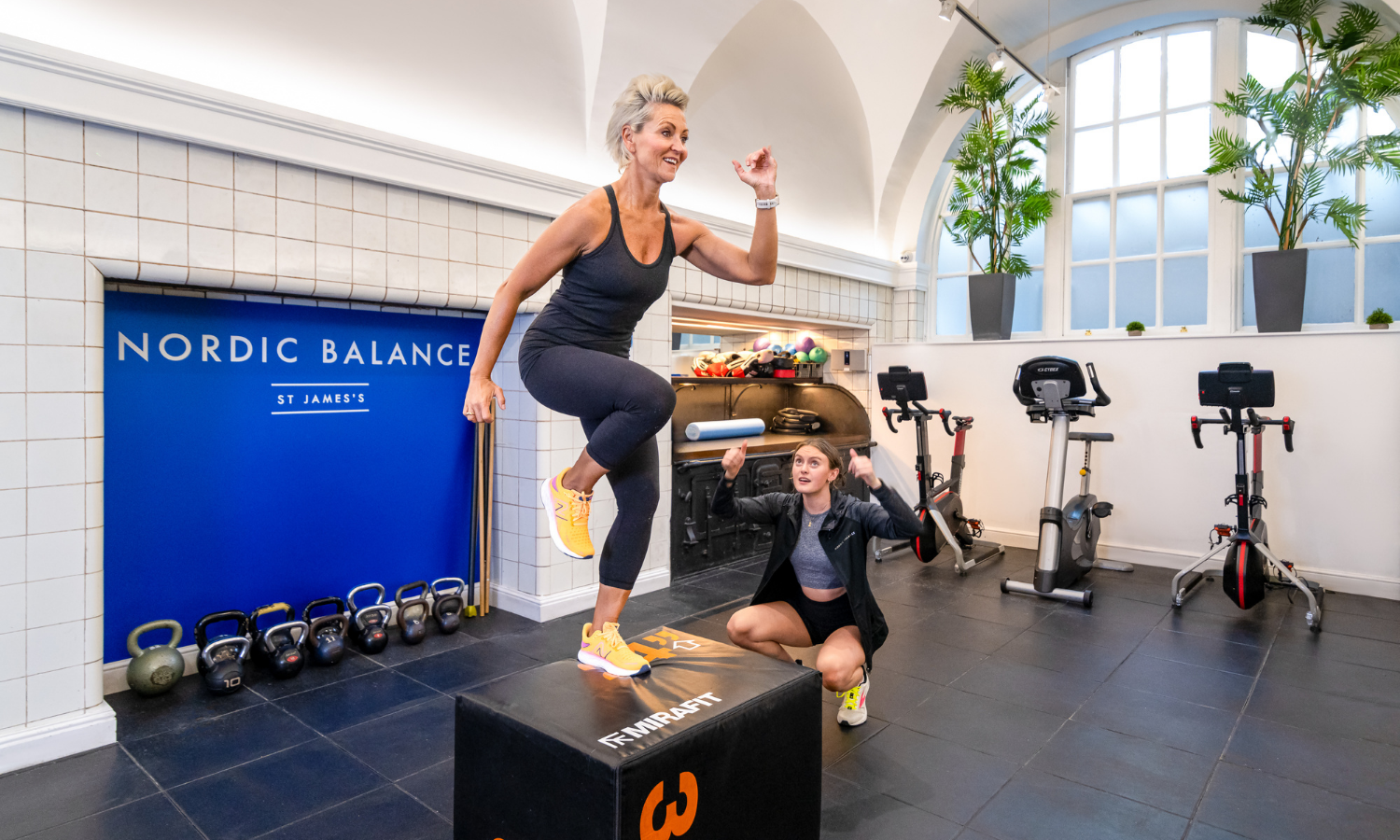
Box jumps
Jump onto a stable raised platform and land under control. The height should allow you to maintain good technique rather than turning the exercise into a test of how high you can tuck your knees. Step down rather than repeatedly jumping off the box when you are first learning the movement.
Adding plyometrics to your training
Quality matters more than accumulating as many jumps as possible. Plyometrics are demanding because they involve speed and impact. Once fatigue starts changing how you jump or land, doing more repetitions doesn’t necessarily add useful training. For many people, plyometric exercises work well at the beginning of a session, after an appropriate warm-up but before heavy fatigue sets in.
You could begin with a small number of exercises, for example:
- A low-level ankle or hopping exercise
- A vertical jumping exercise
- A lateral or forward movement
You can then make the exercises progressively more demanding as your strength, confidence and control improve.
Progression might involve increasing:
- Jump height
- Distance
- Speed
- Number of repetitions
- Complexity
- Direction of movement
You do not need to increase all of these at once. Changing one variable at a time makes it much easier to see how your body responds.
Plyometric training frequency and recovery
More plyometrics do not automatically create more power. These exercises can place considerable demand on muscles, tendons and joints, so recovery matters. For many recreational athletes, one or two appropriately programmed plyometric sessions each week may be enough alongside strength training and sport.
Your appropriate frequency will depend on what else you are doing. Someone already running four times a week and playing football has a very different overall impact load from someone whose main training is in the gym. That wider picture matters. Look at the total amount of running, jumping and high-intensity training in your week rather than treating the plyometric session in isolation.
Managing impact and training load
Plyometric training can be challenging, but beginners don’t need to avoid it. It needs to be scaled appropriately.
Start with movements you can control and give your body time to adapt before increasing impact, speed or complexity.
Pay attention to how you respond during and after training. Persistent pain, a noticeable loss of control, or symptoms that worsen over time are reasons to adjust the exercise rather than simply push through.
Your training history matters too. If you recently returned from an injury or took a long break from running and jumping, your enthusiasm may return faster than your physical capacity. Build back progressively.
Plyometric training isn’t simply about jumping higher in the gym. It is about developing power you can use, whether that means running faster, changing direction confidently, returning to sport, or simply becoming stronger and more capable in the way you move.
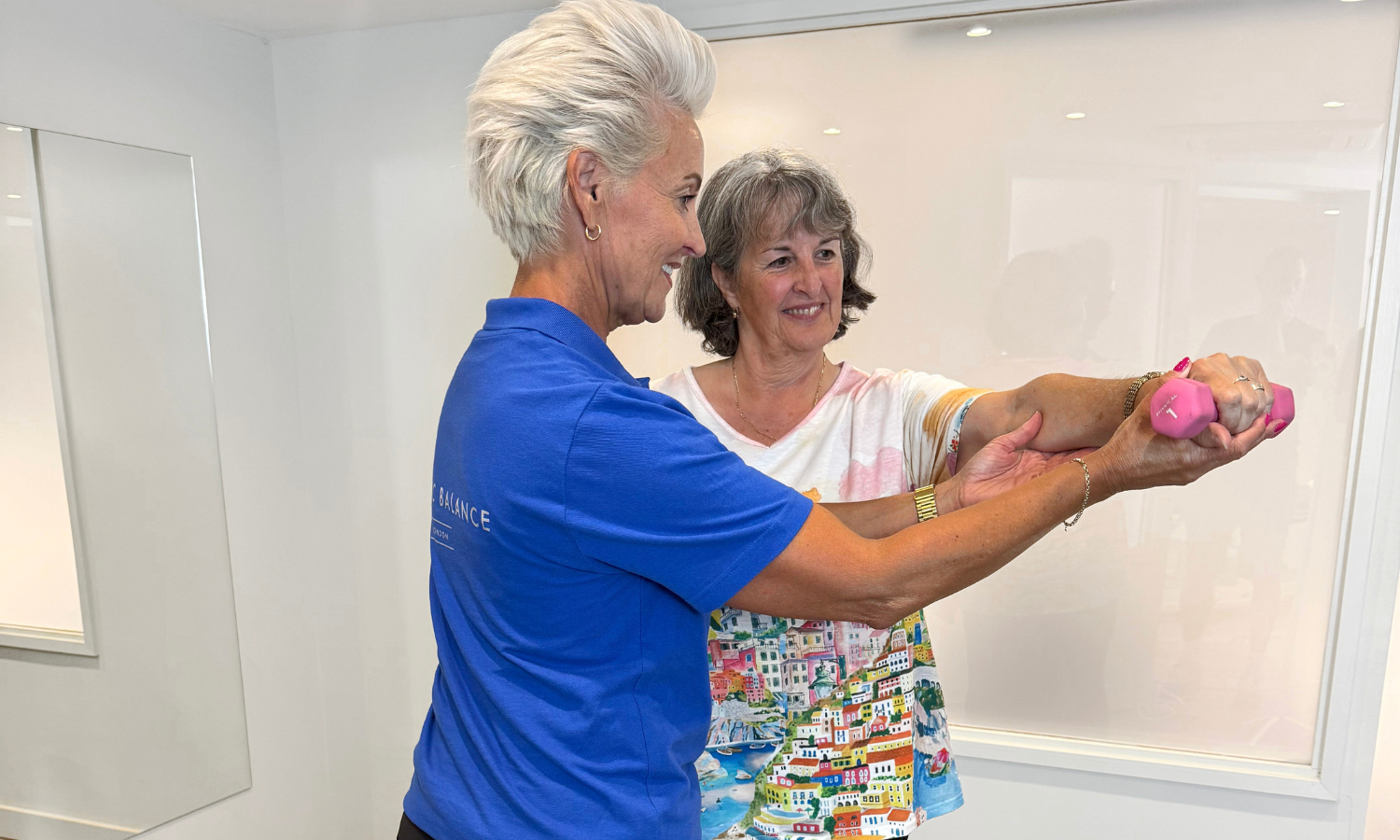
At Nordic Balance St. James’s, our personal trainers can combine strength and plyometric training within a programme shaped around your experience and what you want your training to achieve.